2026-7-15
EZassay™ LAMP Reagents — Independently Validated with a 100× Lower LoD than Conventional PCR
Chosen by researchers. Proven by data.
Overview
In May 2026, a research team from Guangxi University and the Fujian Academy of Agricultural Sciences published a study in *Microorganisms* — and we found out about it the same way everyone else did. EZassay had no involvement whatsoever.
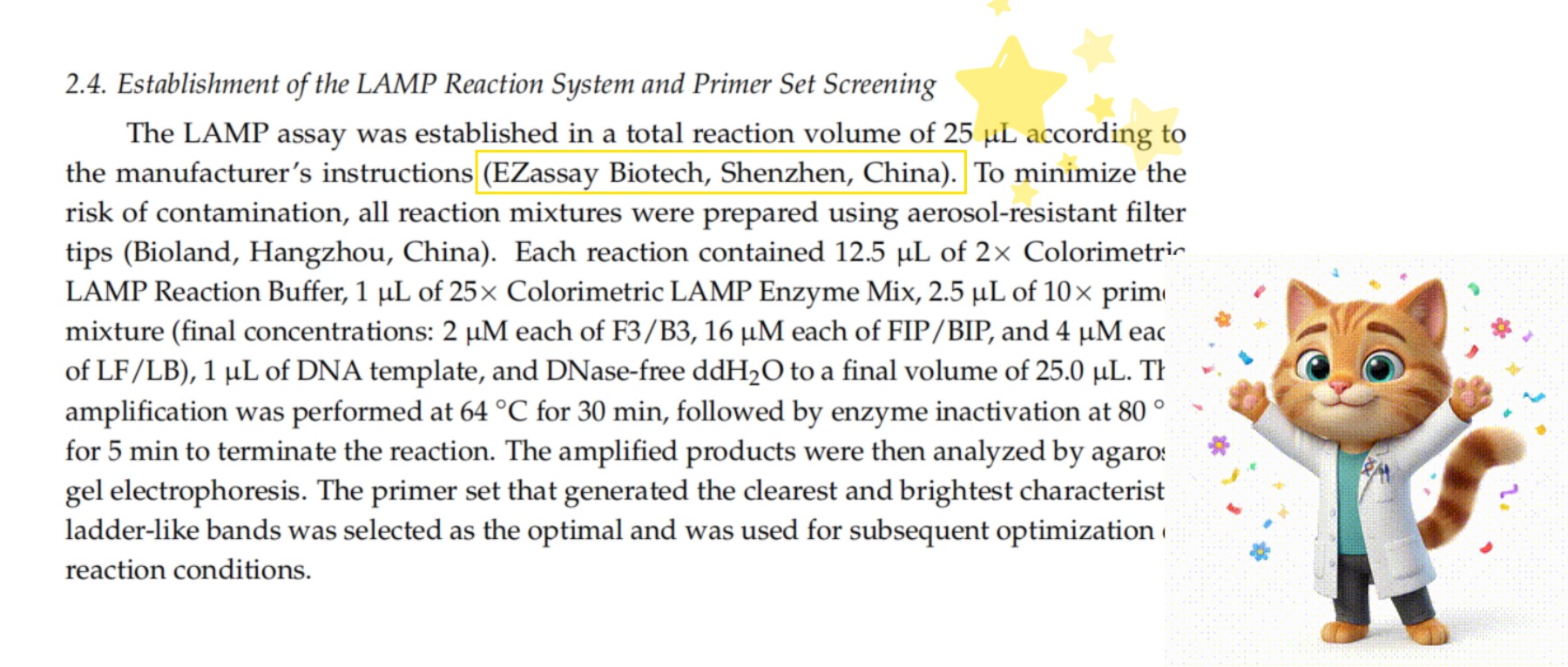
The team was developing a rapid detection method for *R. anatipestifer* (a waterfowl pathogen). They independently screened five primer sets, optimized all reaction conditions, and ultimately selected EZassay's Colorimetric LAMP Reaction Buffer (2×) and Colorimetric LAMP Enzyme Mix (25×) as the amplification core for all experiments.
No collaboration. No sponsorship. No solicited submission. This was a purely technical choice made by independent researchers evaluating reagent performance in their own workflow.
Key Performance Data
Using EZassay LAMP reagents as the amplification core, the authors constructed a complete detection system and performed systematic validation. All data below are from the published study, not EZassay's internal testing.
Parameter | Result | Notes |
|---|---|---|
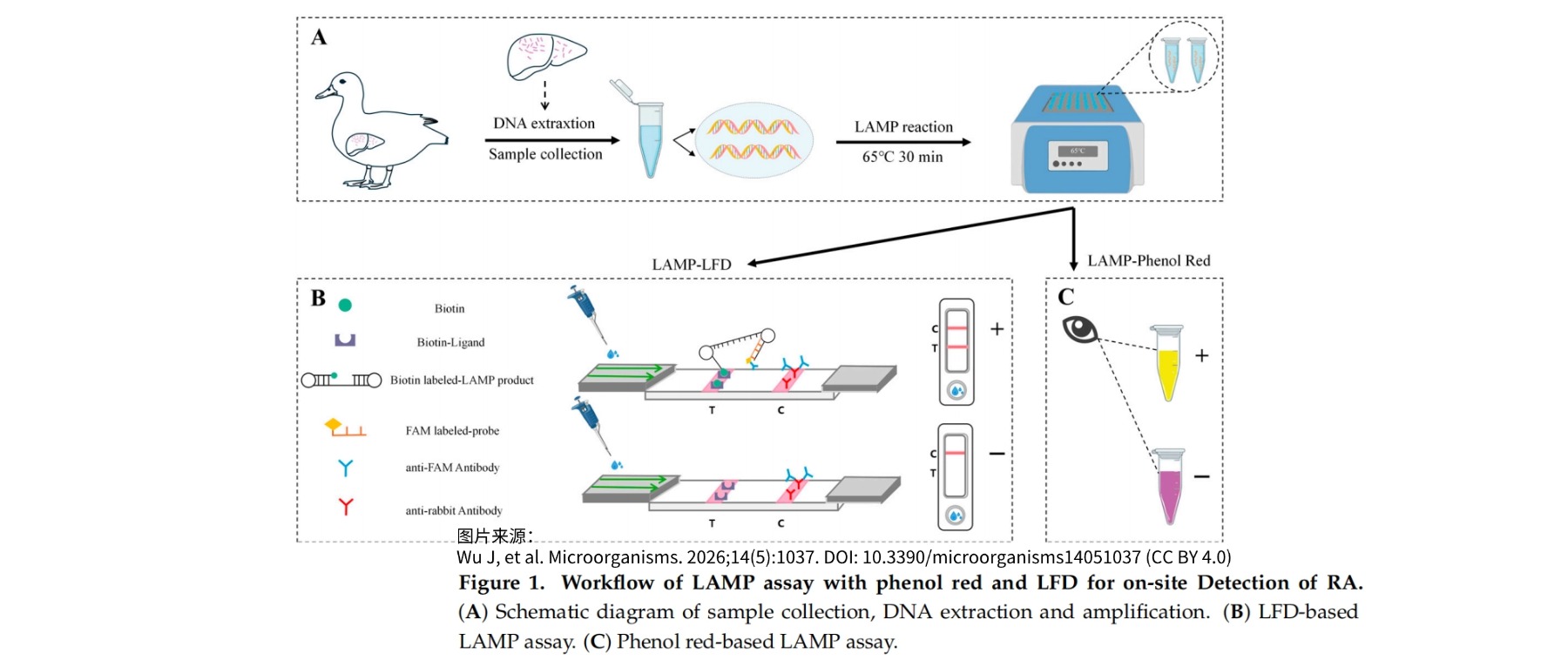
Reaction time | 30 min | Isothermal at 65 °C; no thermal cycler required |
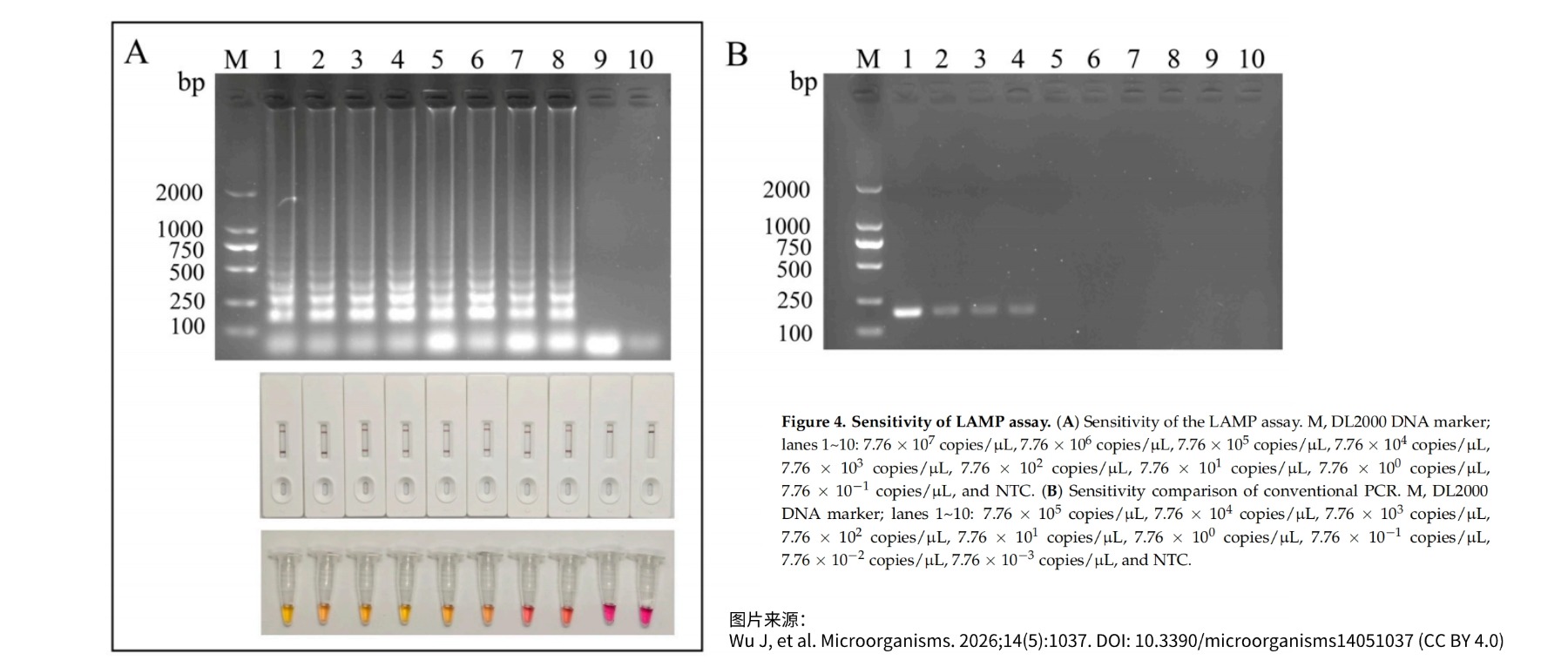
LOD (LFD) | 7.76 copies/μL | 100× more sensitive than conventional PCR (LOD 7.76 × 10² copies/μL) |
LOD (Phenol red) | 7.76 × 10² copies/μL | Naked-eye readout; instrument-free |
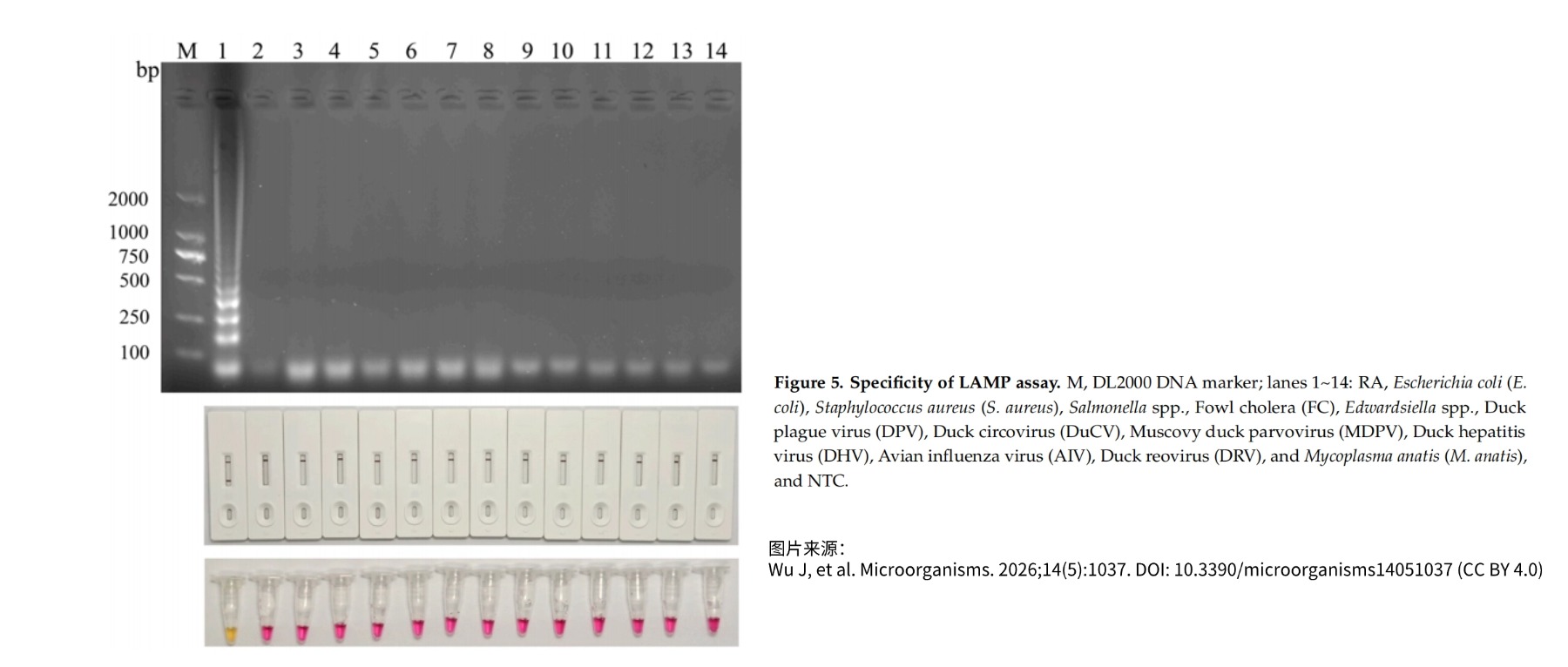
Specificity | 100% | No cross-reactivity with 12 common waterfowl pathogens |
Clinical sensitivity (n = 30) | 63.3% (LFD) | PCR: 56.7% |
Repeatability | 100% | 4 concentration levels; intra- and inter-assay CV = 0 |
Two Visual Detection Methods
With EZassay LAMP reagents at the amplification core, the study developed two complementary readout strategies.
Method 1 — Phenol Red Colorimetry
LAMP amplification generates H⁺ ions, lowering reaction pH. The phenol red indicator shifts from pink (negative) to yellow (positive). Result interpretation requires only the naked eye — zero instrumentation. Well-suited for field-level screening.
Method 2 — Lateral Flow Dipstick (LFD)
FAM-labeled probe hybridization followed by capture on gold-conjugated antibody strips (LFD strips sourced from Milenia Biotec GmbH, Germany). Positive: control line (C) + test line (T) visible. Negative: C line only. Adding 3–5 min post-amplification hybridization brings the LoD to 7.76 copies/μL — 100× more sensitive than PCR.
Why This Study Matters
1. Independent validation is stronger than self-reported claims.
The authors explicitly state: "The authors declare no conflicts of interest." The research team has no affiliation, collaboration, or financial relationship with EZassay. Their reagent selection was based purely on technical assessment.
2. Cross-species, cross-scenario versatility confirmed.
The study targeted R. anatipestifer (an avian pathogen), but EZassay LAMP reagents are platform-agnostic:
- Not limited to human pathogen detection
- Applicable to veterinary diagnostics, food safety, and environmental monitoring
- Customers can develop their own target-specific assays on the EZassay platform
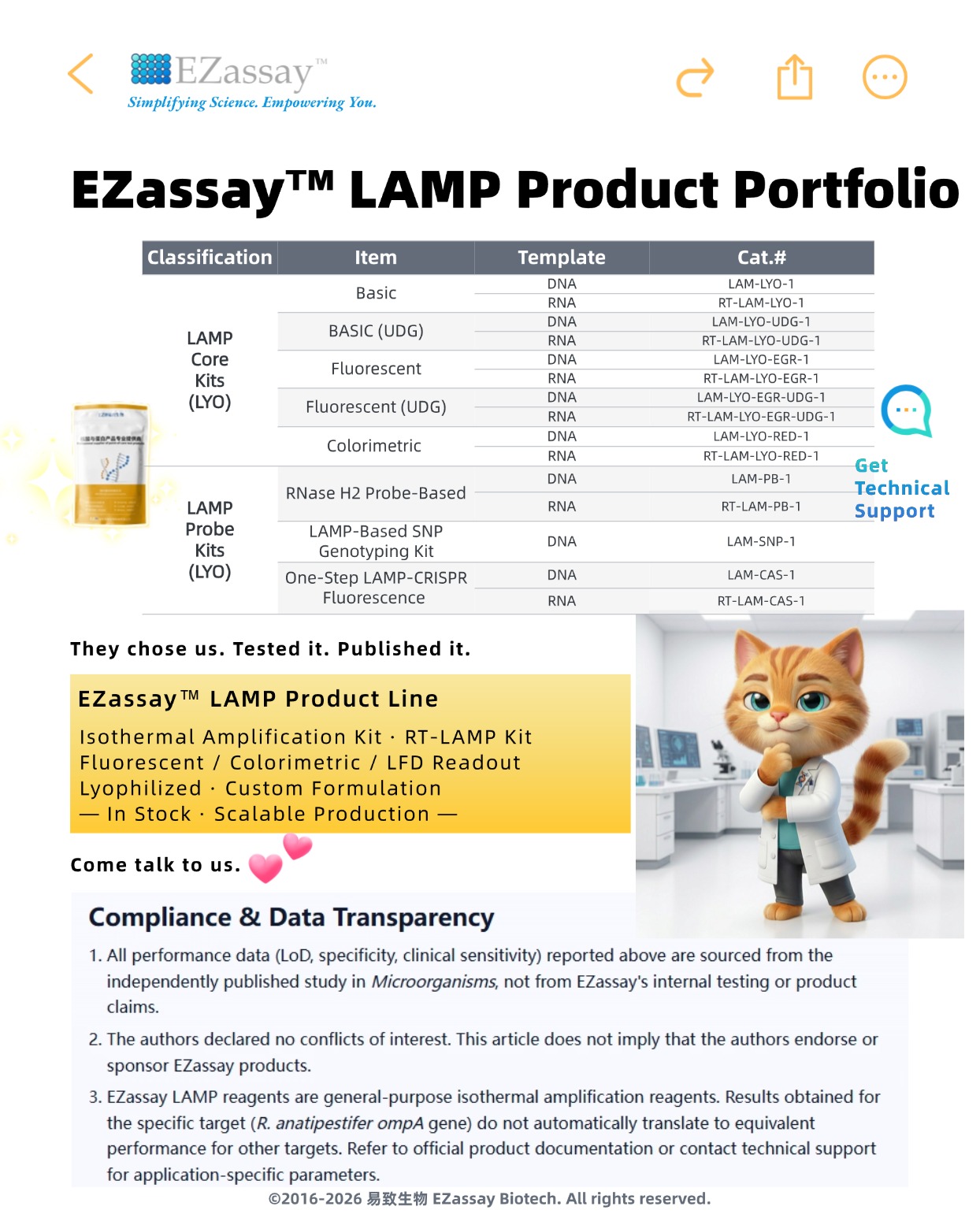
EZassay LAMP Product Portfolio
Product | Format | Application |
|---|---|---|
LAMP Isothermal Amplification Kit | Multiple sizes | Core amplification system (Bst2.0 polymerase) |
RT-LAMP Isothermal Amplification Kit | Multiple sizes | Reverse transcription + LAMP in one tube |
Lyophilized LAMP Beads | Customizable | Ambient-temperature shipping; ready-to-use |
LFD Detection System | Customizable | Rapid visual readout |
Fluorescent dye, colorimetric, and lateral flow readout options available. Custom formulation and scale-up supported.
Compliance & Data Transparency
- All performance data (LoD, specificity, clinical sensitivity) reported above are sourced from the independently published study in Microorganisms, not from EZassay's internal testing or product claims.
- The authors declared no conflicts of interest. This article does not imply that the authors endorse or sponsor EZassay products.
- EZassay LAMP reagents are general-purpose isothermal amplification reagents. Results obtained for the specific target (R. anatipestifer ompA gene) do not automatically translate to equivalent performance for other targets. Refer to official product documentation or contact technical support for application-specific parameters.
Original paper: Microorganisms 2026, 14(5), 1037 | Full text available via PMC13209838 under CC BY 4.0.