2026-1-27
LAMP Primer Design Guideline
A Practical Guide
The essence of LAMP (Loop-mediated Isothermal Amplification) lies in its multi-primer system. Well-designed primers ensure both sensitivity and specificity, making primer design the key to successful amplification.
1. Primer Set
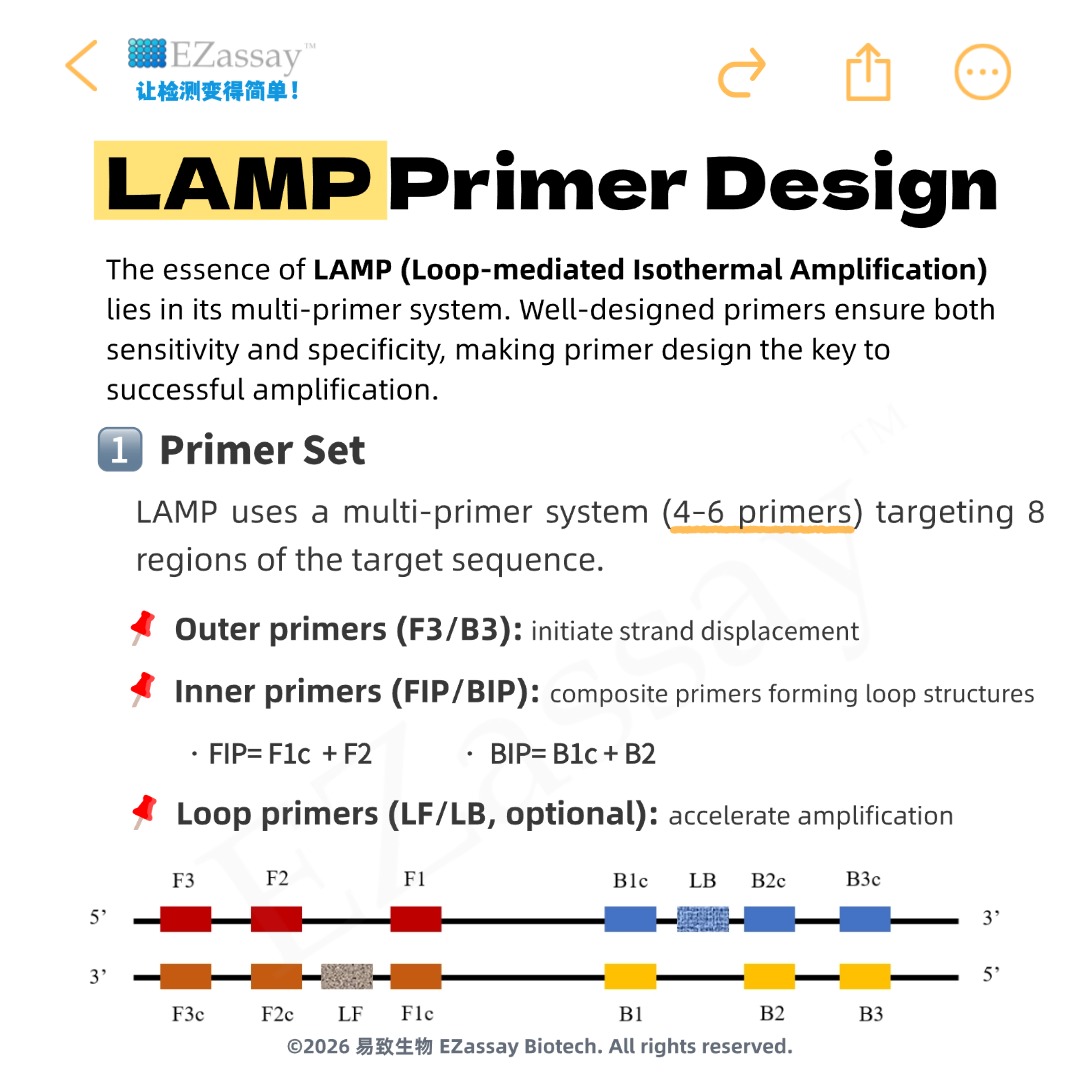
A standard LAMP assay requires 4 - 6 primers, recognizing 8 regions of the target sequence:
- Outer primers(F3/B3)
- Inner primers(FIP/BIP)
- Loop primers(LF/LB,optional)
2. Target Sequence Selection
- Length
- Specificity
- Avoid secondary structures
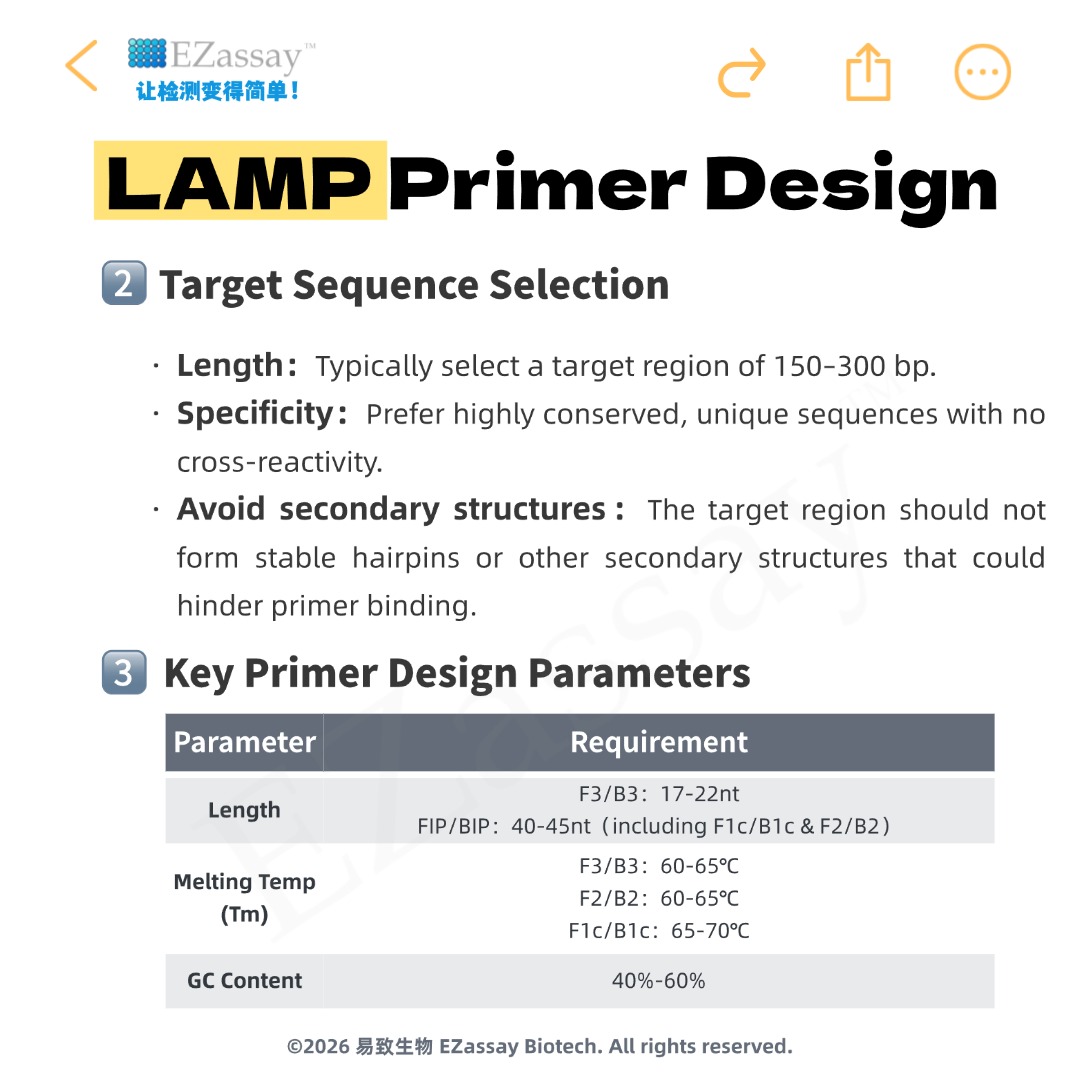
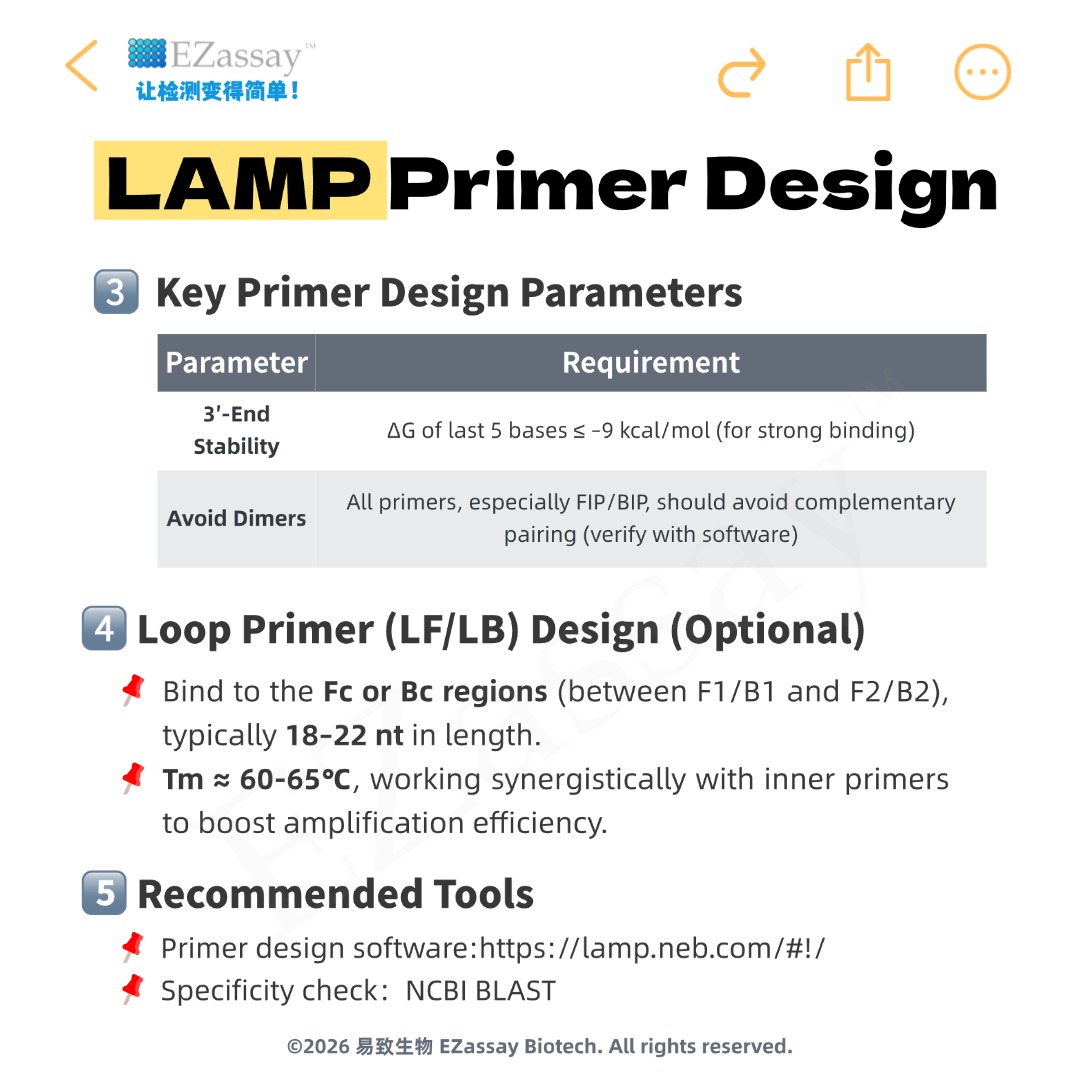
3. Key Primer Design Parameters
Length, Melting Temp (Tm), GC Content, 3'-End Stability, Avoid Dimers
4. Loop Primer (LF/LB) Design (Optional)
- Bind to the Fc or Bc regions (between F1/B1 and F2/B2), typically 18–22 nt in length.
- Tm ≈ 60-65℃, working synergistically with inner primers to boost amplification efficiency.
5. Recommended Tools
- Primer design software:https://lamp.neb.com/#!/
- Specificity check:NCBI BLAST
6. Validation and Optimization
- Specificity test: Use BLAST to rule out off-target binding.
- Sensitivity test: Perform template serial dilutions to determine the limit of detection (LOD).
- Colorimetric compatibility: For assays using dyes, ensure primers do not interfere with colorimetric signals.
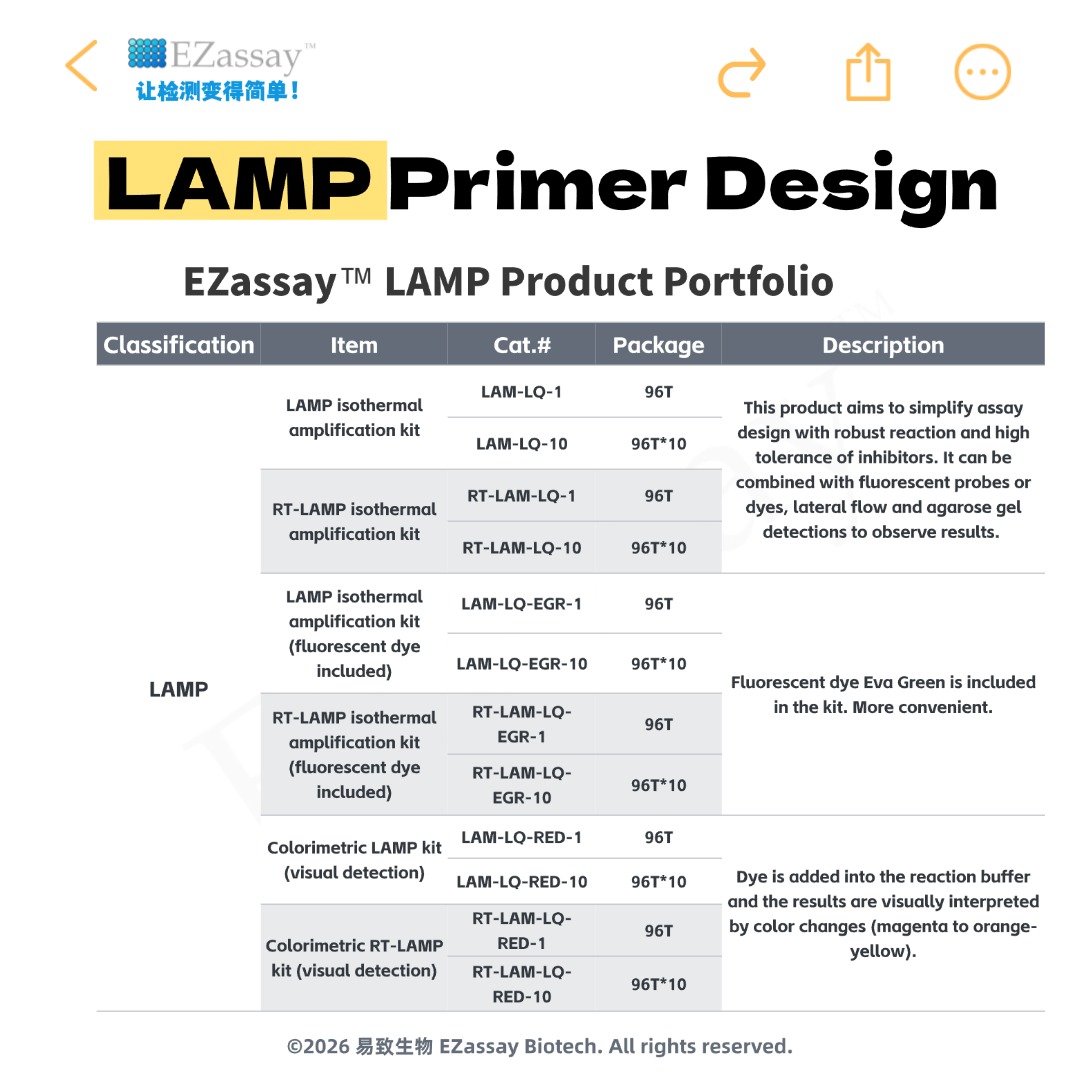
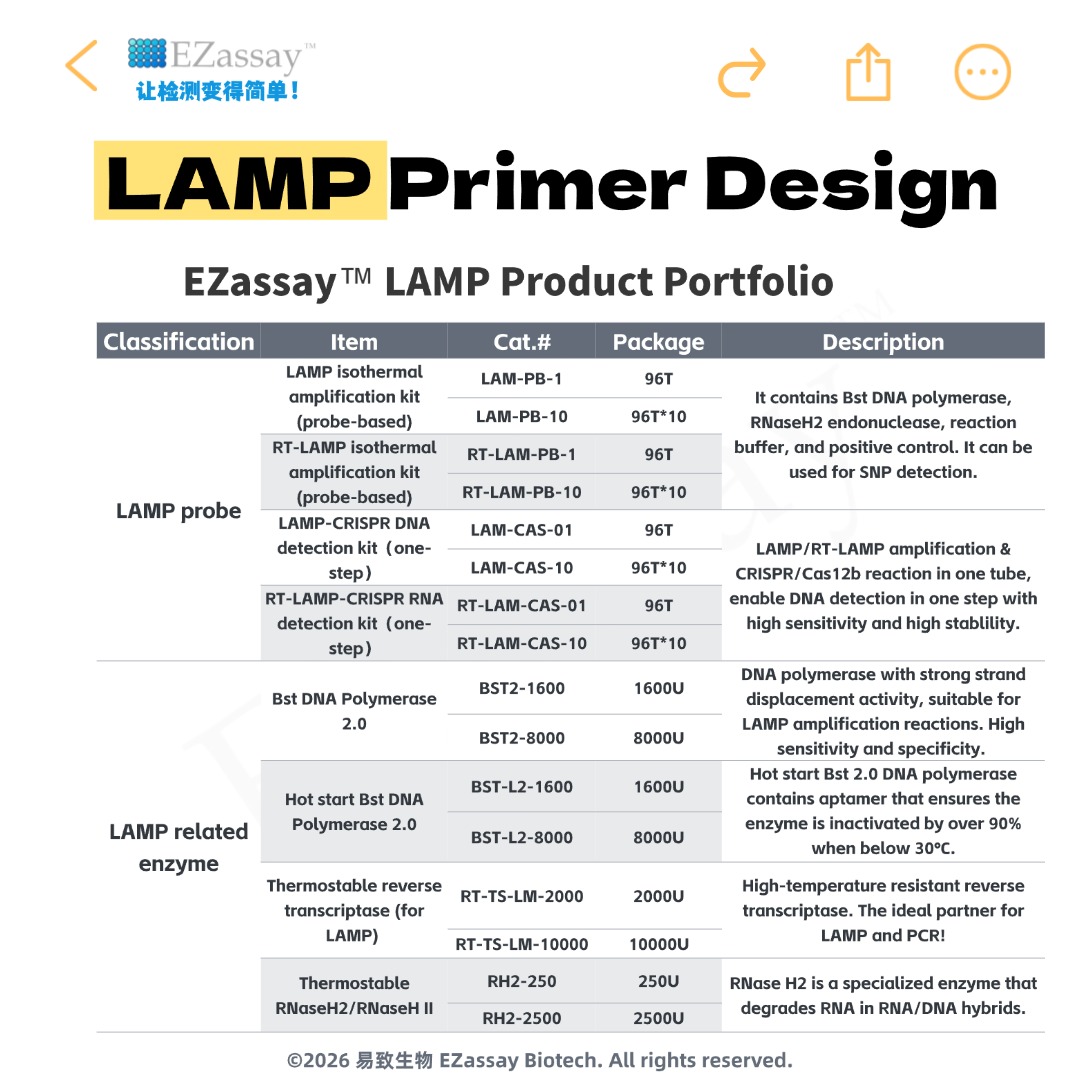
Appendix: EZassay Biotech™LAMP Product Portfolio
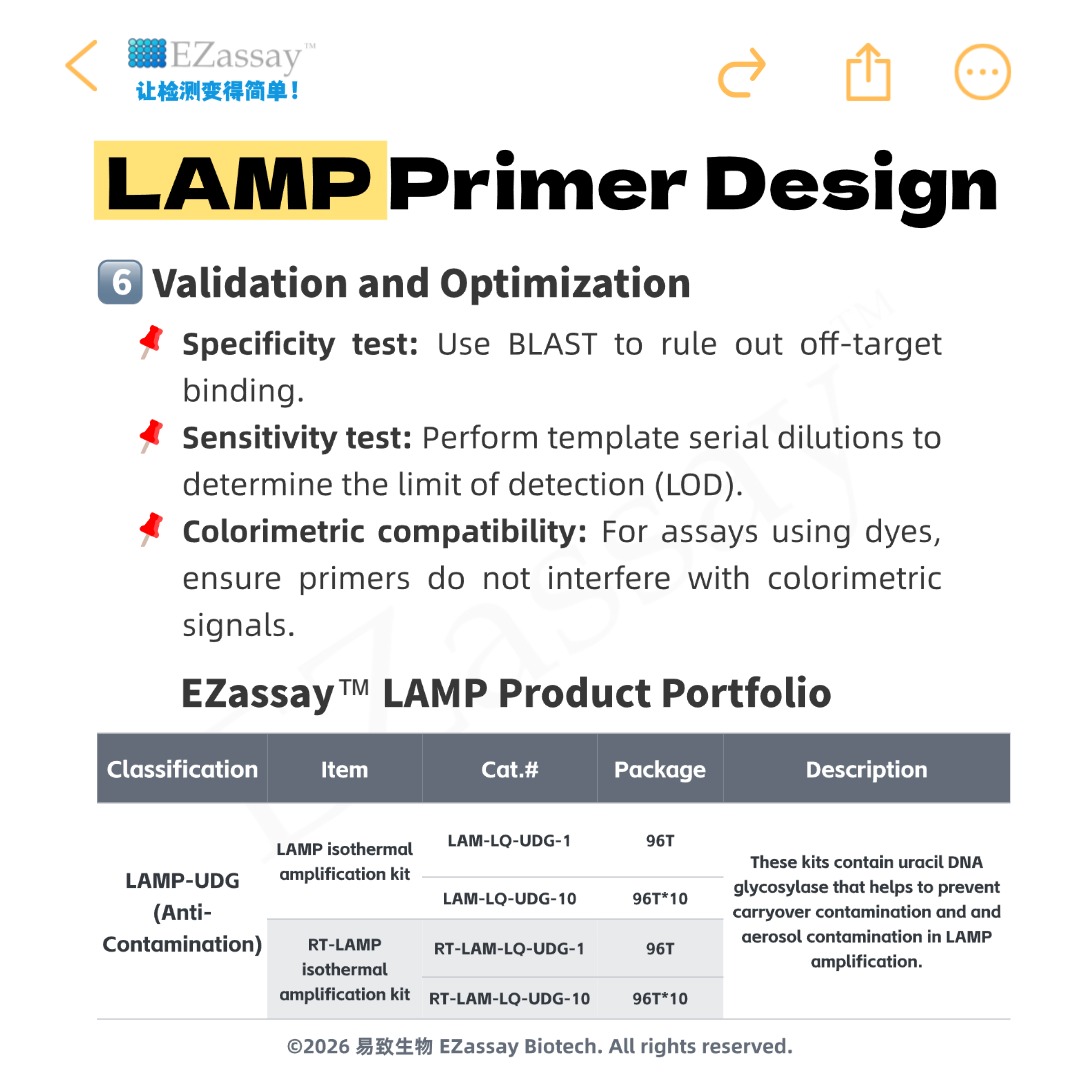
For product information and technical support, please contact EZassay Biotech™.
#LAMP #PrimerDesign #IsothermalAmplification #MolecularBiology #Diagnostics #LifeScience #EZassayBiotech