2026-4-7
RPA Amplification Failure?-- Guide to Primer Design & Kit Selection
From 30-35nt length rules to Exo/Nfo system selection — discover the essential technical checklist to minimize non-specific amplification in your RPA assays.
Struggling with blank gels or overwhelming background noise? In Recombinase Polymerase Amplification (RPA), success is often determined the moment you design your primers.
To help you bypass common pitfalls and optimize your assay performance, we have consolidated 10 Essential Tips for RPA Primer Design and strategic Kit Selection advice.
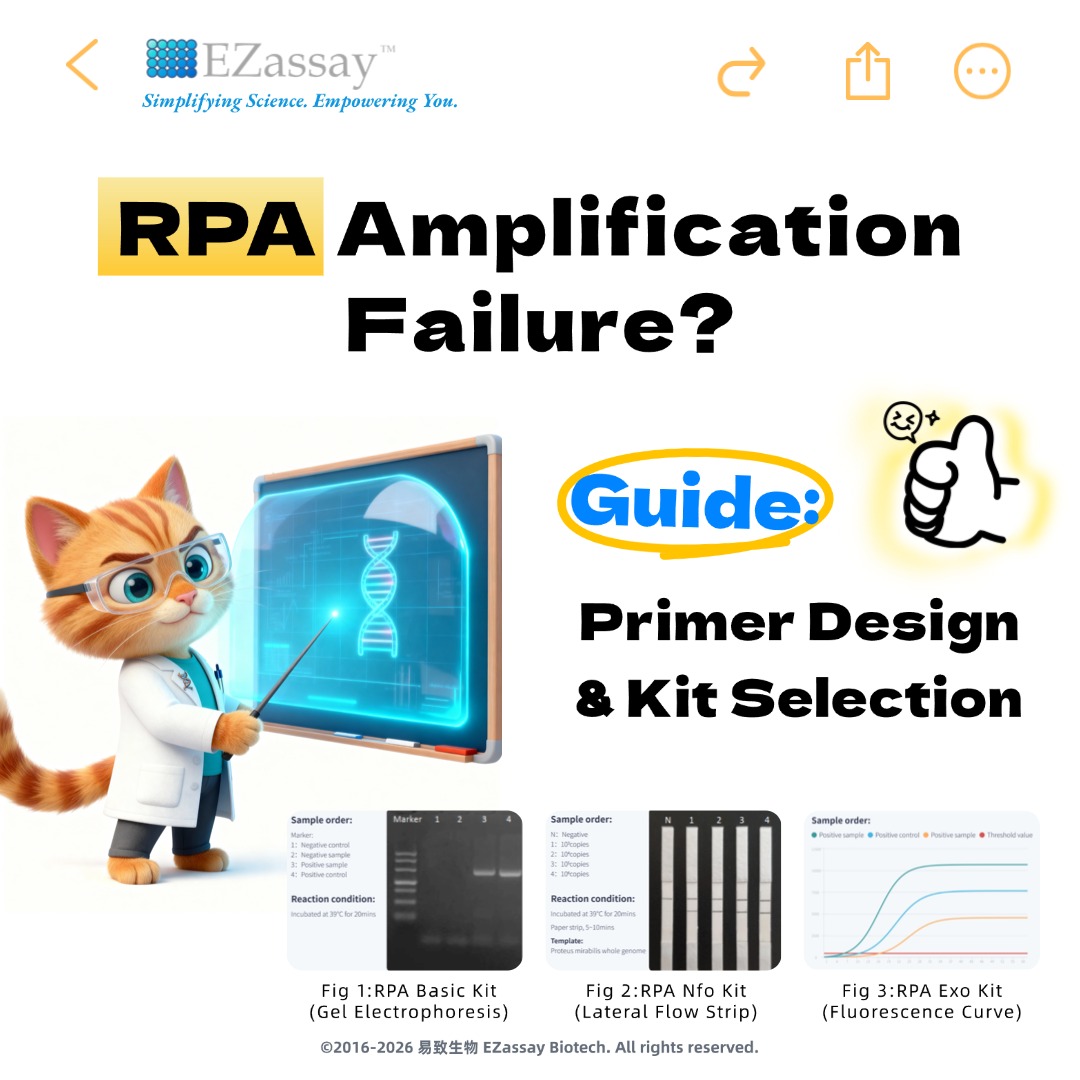 RPA Amplification Failure Troubleshooting Guide - Primer Design and Kit Selection for Isothermal Amplification. By EZassay Biotech. Ltd.
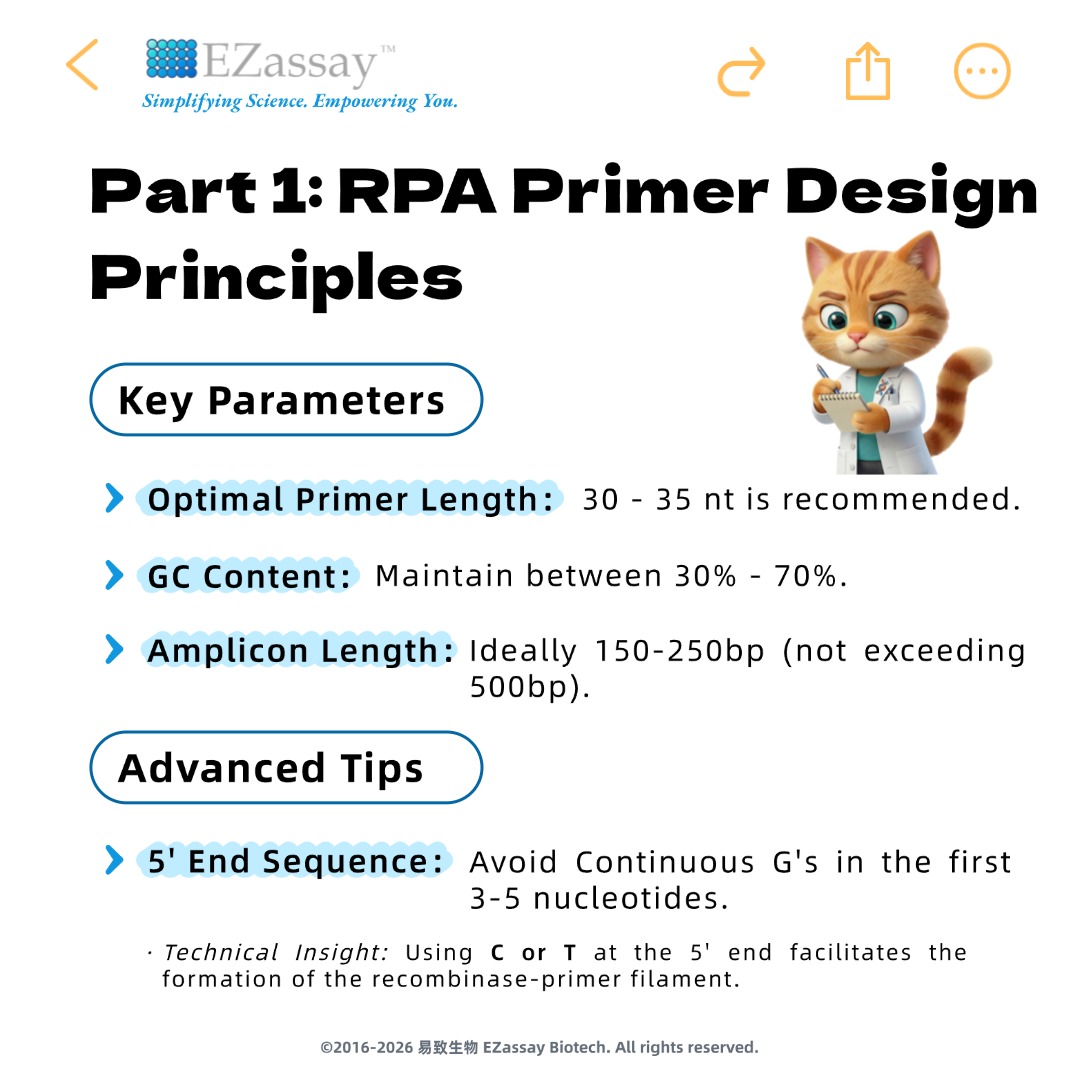 RPA Primer Design Rules: 30-35nt Optimal Length, 30-70% GC Content, and 150-250bp Amplicon Size for maximum sensitivity.
Phase 1: Core Principles of RPA Primer Design
Meeting these physical and structural criteria is the prerequisite for the recombinase to successfully initiate the reaction.
I. Key Structural Metrics
- Primer Length: 30--35nt is recommended.
- GC Content: Maintain between 30%--70%.
- Amplicon Length: Keep it short for speed. Ideally 150--250 (not exceeding 500bp).
II. Advanced Design Tips
- 5’ End Composition: Avoid consecutive G residues in the first 3-5 nucleotides. Using C or T at the 5’ end facilitates better filament formation.
- 3’ End Stability: Ending with G or C (last 3 bases) can enhance polymerase anchoring. However, avoid more than 3 consecutive G/C bases to prevent mispriming at GC-rich regions.
- Sequence Homology:
- Monopolymers: Avoid runs of >4 identical bases.
- Self-Complementarity: Ensure no hairpin structures are formed.
- Primer Dimers: Avoid >4 complementary bases between primers, especially at the 3’ ends.
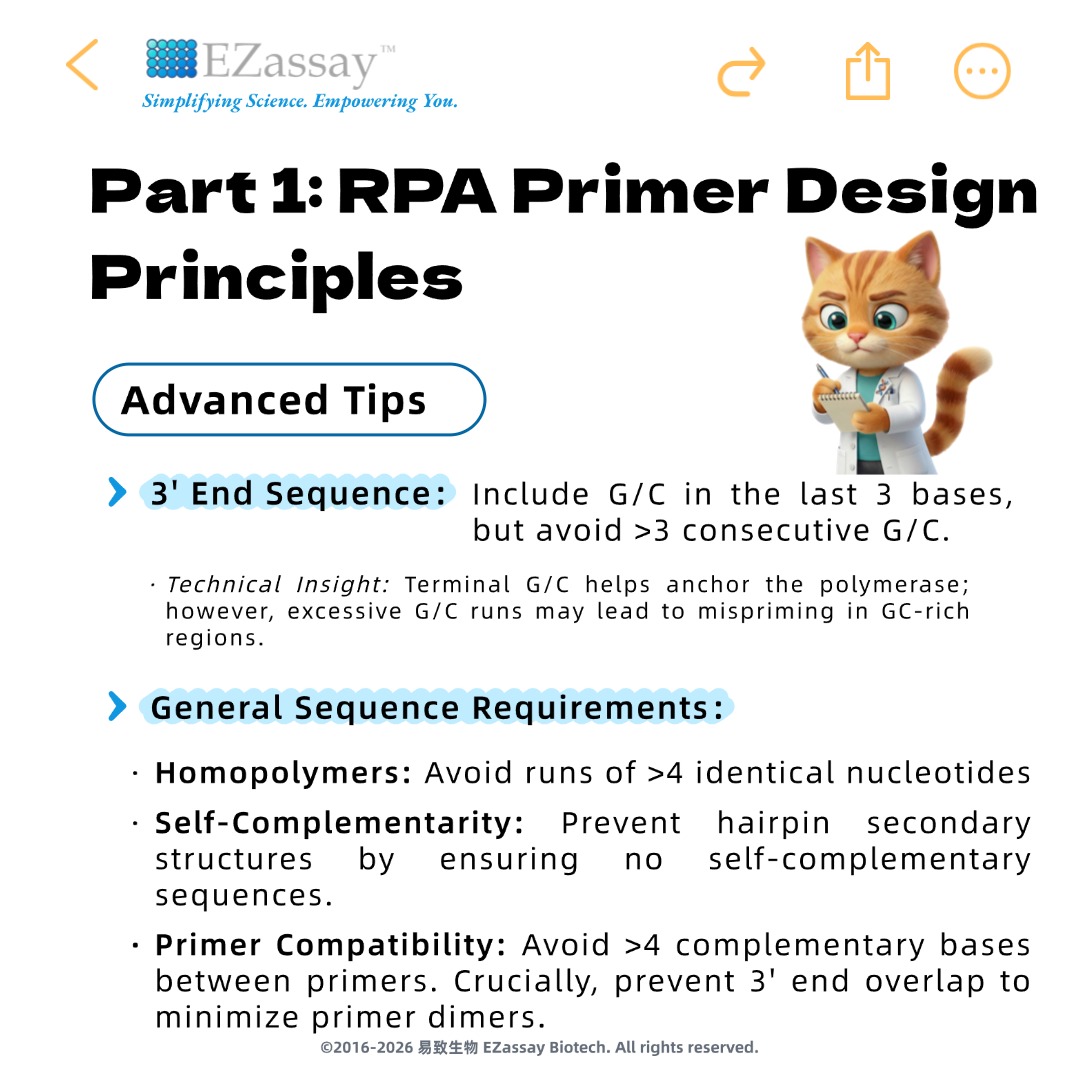 Advanced RPA Primer Tips: Avoiding continuous Gs at 5-prime end and including G or C at 3-prime end for polymerase anchoring.
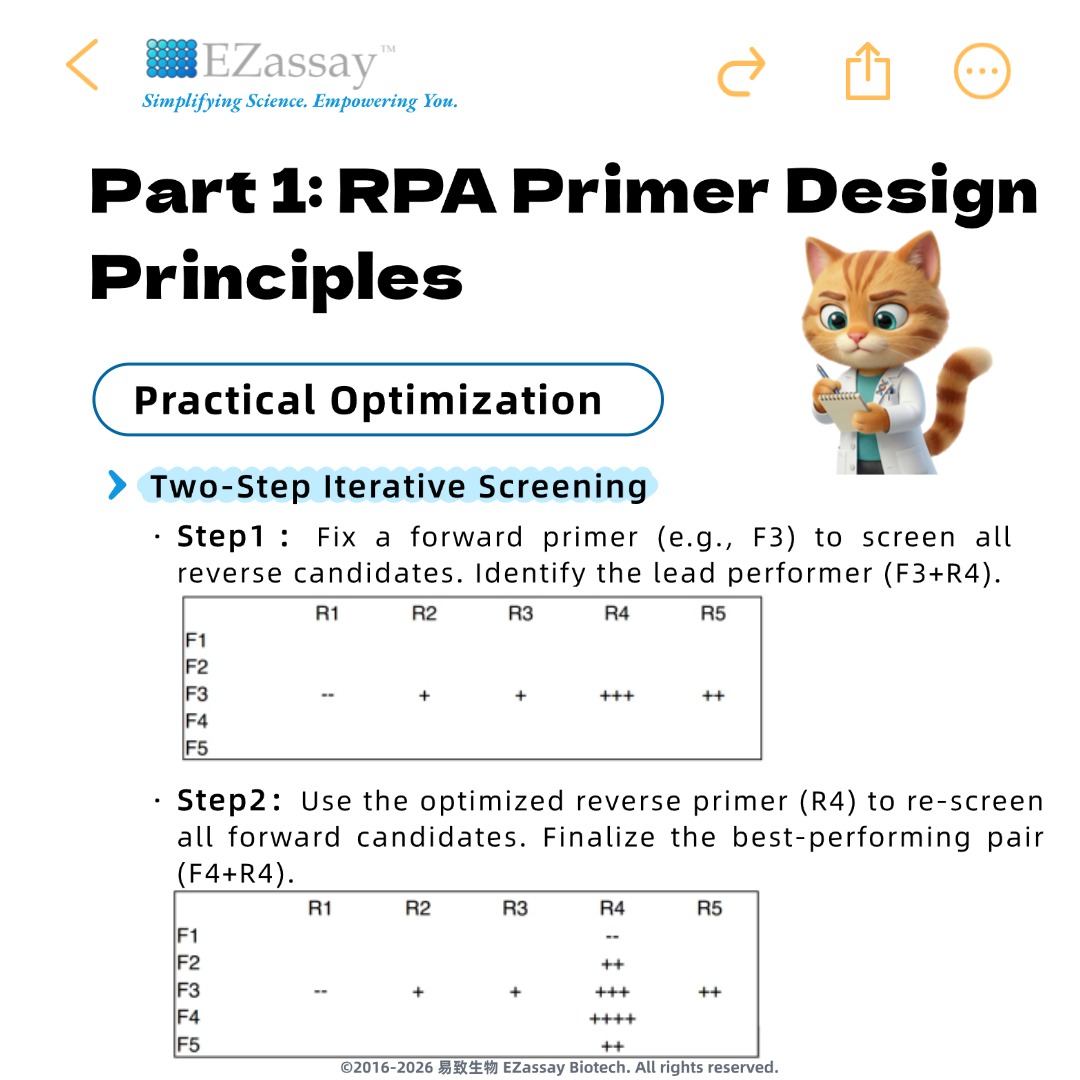 2-Step Iterative Screening for RPA Primers, Robustness Stress Testing, and System Fine-tuning with 0.1-0.6uM primer concentration.
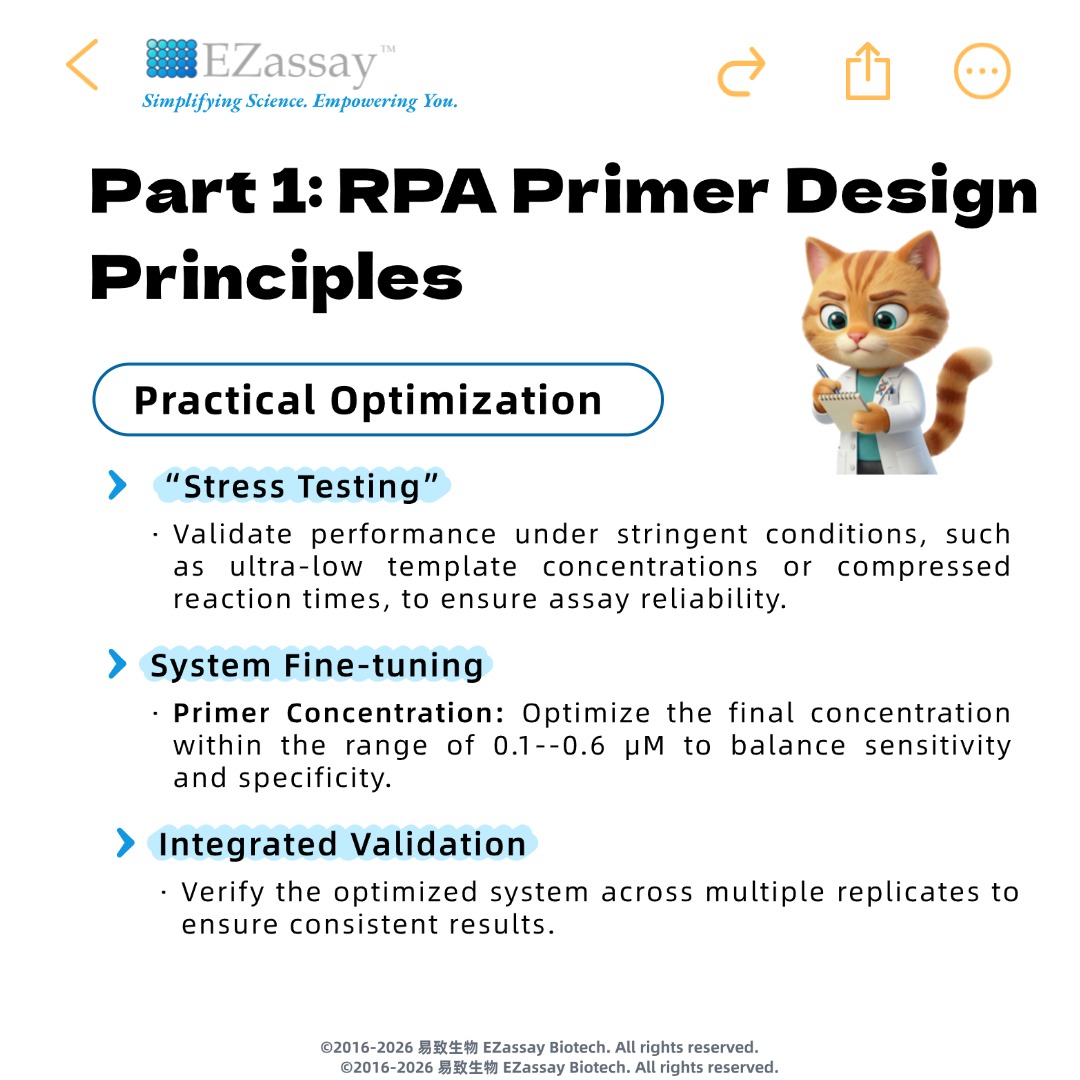 2-Step Iterative Screening for RPA Primers, Robustness Stress Testing, and System Fine-tuning with 0.1-0.6uM primer concentration.
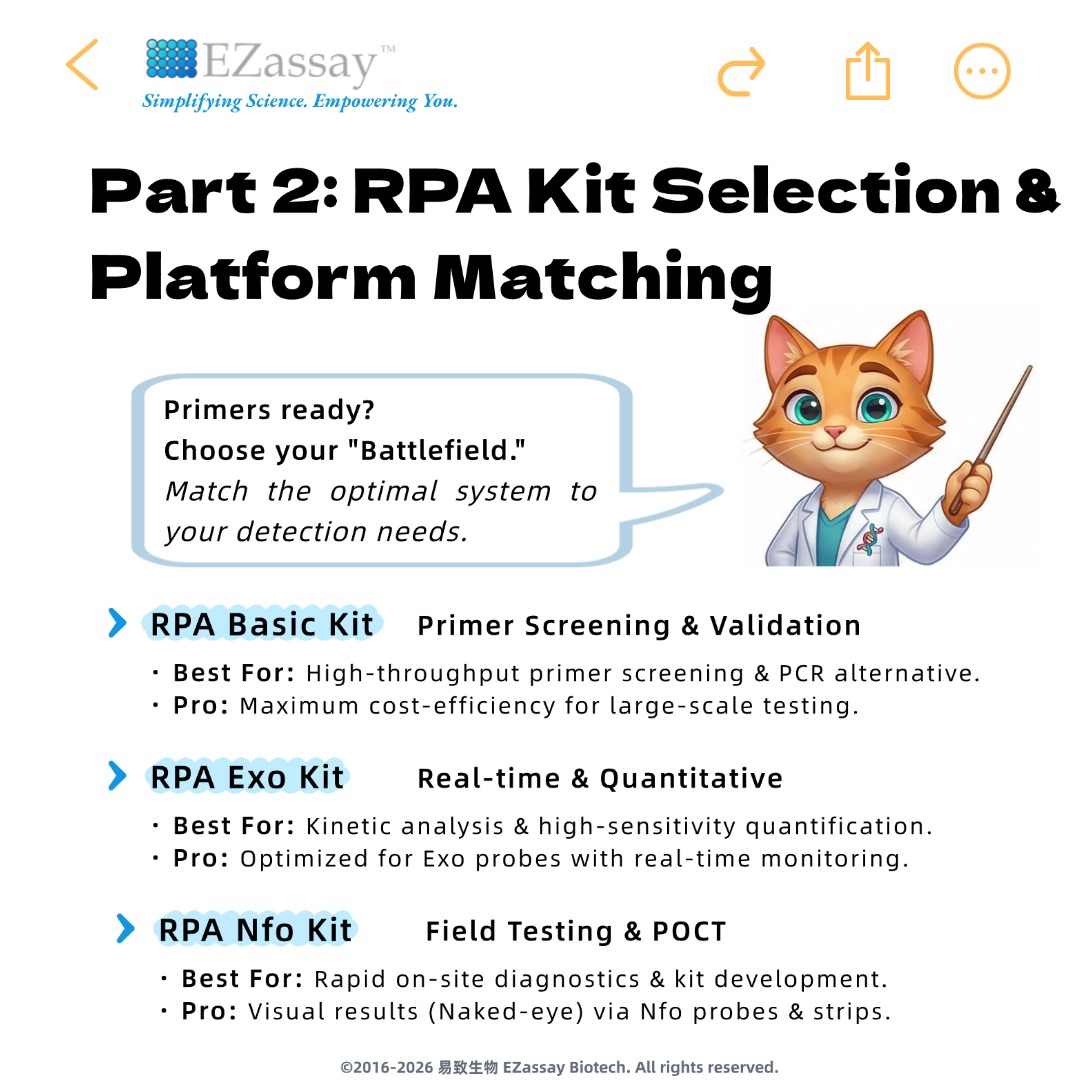 Choosing RPA Kits: Basic for screening, Exo for real-time quantification, and Nfo for visual POCT lateral flow assays.
III. Practical Screening & Optimization
- Two-Step Iterative Screening:
- Step 1: Fix a Forward primer (e.g., F3) to screen all Reverse candidates. Identify the best performer (e.g., F3 + R4).
- Step 2: Use the optimized Reverse primer (R4) to re-screen all Forward candidates to find the ultimate pair ( F4+R4 ).
- Robustness Check (Stress Testing): Validate your primers under "challenging" conditions, such as low template concentrations or shortened incubation times.
- System Fine-tuning: Adjust final primer concentrations within the 0.1--0.6 μM range to balance sensitivity and specificity.
- Direct Interpretation: Use Agarose Gel Electrophoresis during the screening phase for a clear visual assessment of band purity.
Phase 2: Strategic Kit Selection — Choose Your Arena
Once your primers are optimized, selecting the right "Arena" (detection system) is critical for experimental efficiency.
- RPA Basic Kit: High-Throughput Screening & Qualitative Assays
- Best for: Cost-effective large-scale primer screening and routine PCR replacement.
- RPA Exo Kit: Real-Time Quantification & High-Impact Research
- Best for: Monitoring amplification curves in real-time with superior sensitivity and objective data output.
- RPA Nfo Kit: On-site Diagnostics & POCT Development
- Best for: Visual detection (Lateral Flow Strips) without specialized equipment. Ideal for field-use applications.
Technical Insights:
- System Interoperability: Primers screened via the Basic Kit are fully compatible with Exo or Nfo systems.
- Performance Boost: The Exo system allows for further optimization via fluorescence probes to enhance specificity.
- Rapid Transition: Seamlessly switch to Lateral Flow assays by adding simple modifications (e.g., Biotin, FITC) while keeping the core sequence unchanged.
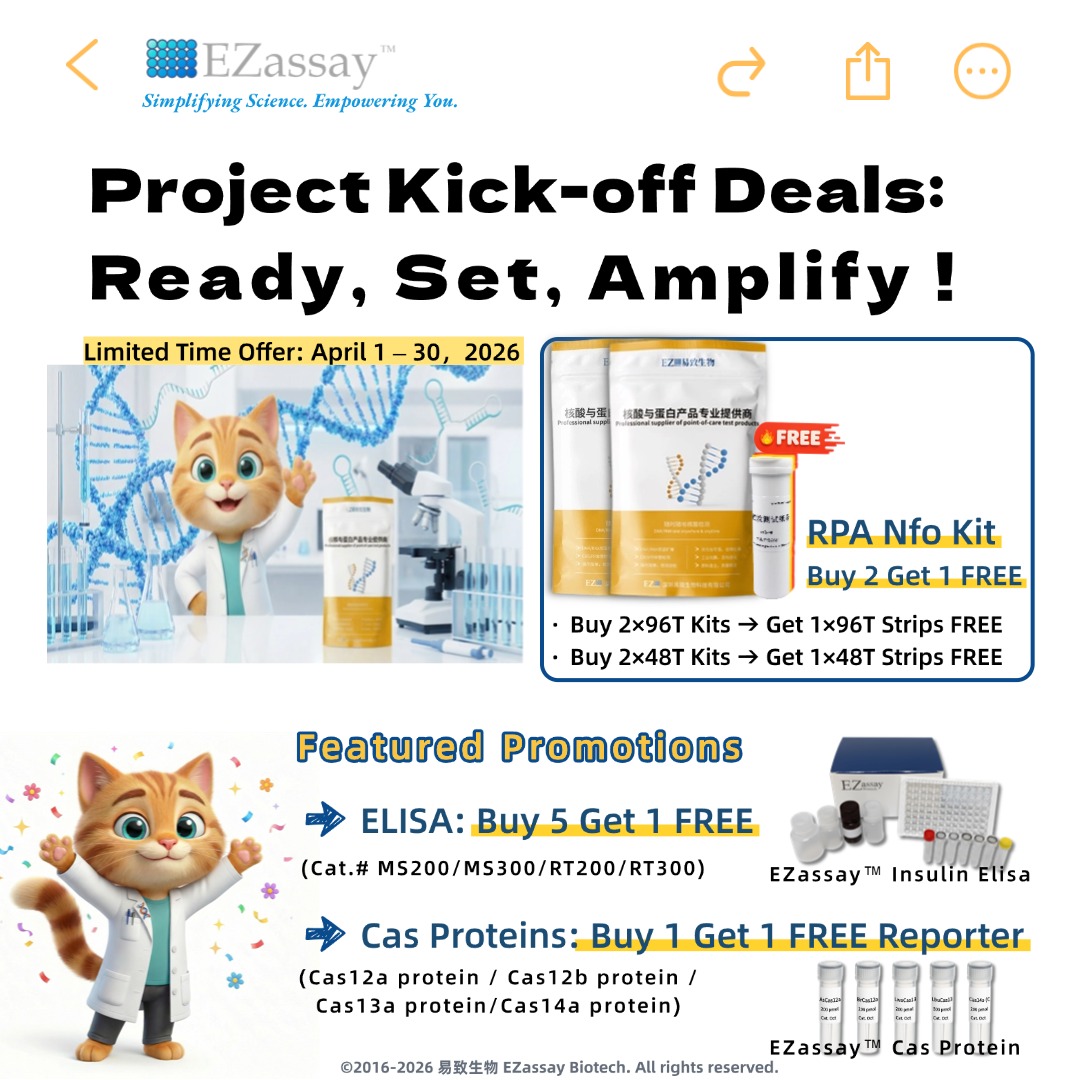 EZassay™ Project Kick-off Deals: Buy 2 Get 1 FREE on RPA Nfo Kits and Cas Protein promotions - Valid April 1-30, 2026.
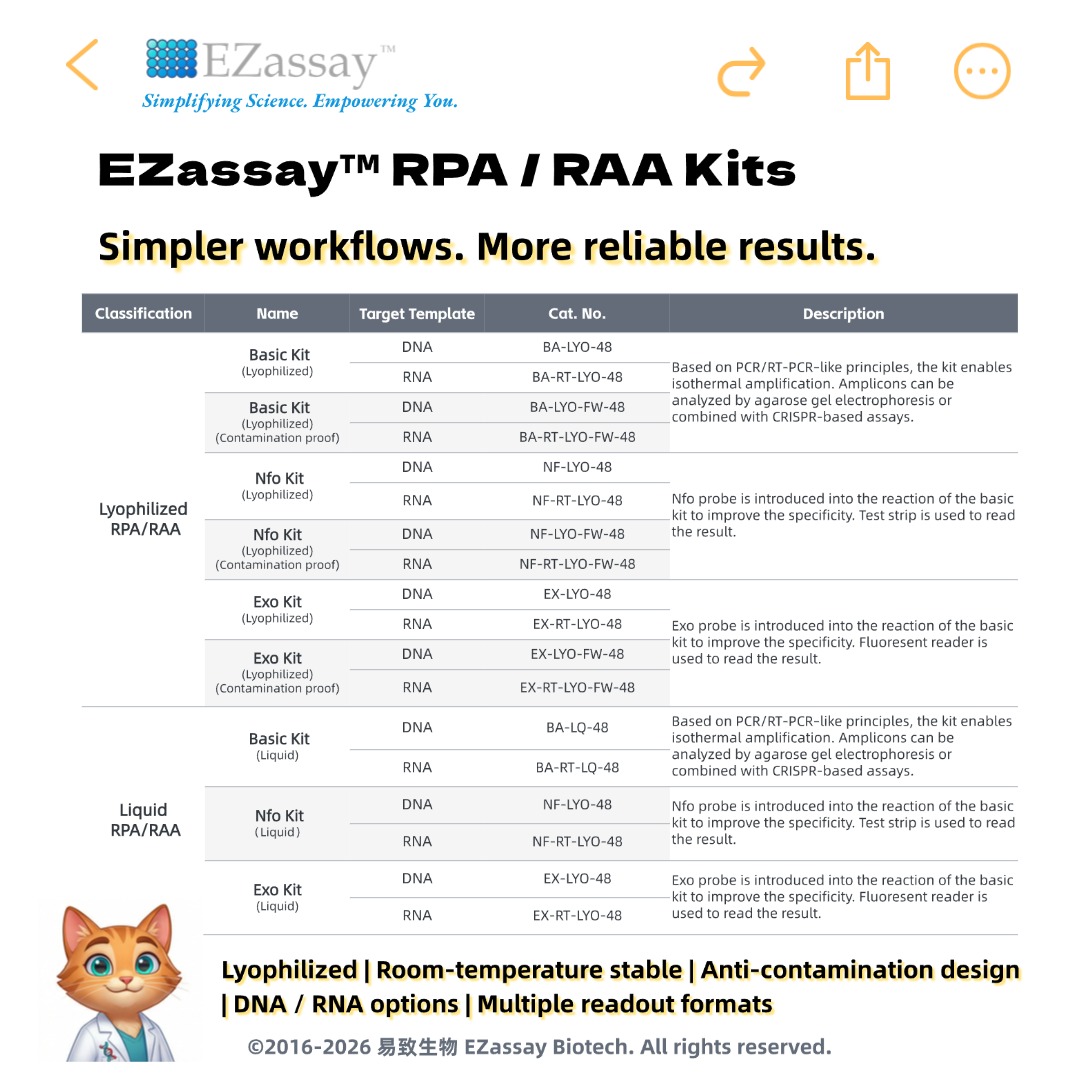 EZassay™ RPA Product Matrix: Basic, Exo (Fluorescence), and Nfo (Lateral Flow) Kits available in Liquid, Lyophilized (Freeze-dried), and Anti-contamination formats for molecular diagnostics and POCT.
⚡ Project Kick-off Special: April 1 – 30 , 2026
Stock up more, experiment better. Ready, Set, Amplify!
Offer 1: RPA/RAA Nfo Special (Buy 2 Get 1 FREE)
- Buy 2x 96T Kits → Get 1x 96T Strips FREE
- Buy 2x 48T Kits → Get 1x 48T Strips FREE
Featured Promotions:
- Cas Proteins: Buy 1, Get 1 FREE Reporter
- Insulin ELISA: Buy 5, Get 1 FREE
Professional Technical Support
Whether you are at the initial screening stage or scaling up for POCT industrialization, we provide stable and reliable molecular tools.
Our specialized Anti-Contamination RPA Kits significantly reduce aerosol risks, while our Lyophilized Kits offer exceptional stability for room-temperature transport, breaking the limitations of the cold chain.
Contact Us / Scan QR Code to reach our technical consultants for application advice, optimization references, or product selection support.
#RPA #IsothermalAmplification #PrimerDesign #MolecularDiagnostics #POCT #LabHacks #Biotech #CRISPR #ScienceDeals