2026-1-27
Unstable Cas12a Signal? Check Your Concentration First.
Real gradient data included.
Cas12a forms a complex with crRNA,is activated by target DNA,and cleaves the reporter to generate fluorescence.
Same concentrations — different signals? You’re not alone.
Why it happens
Cas12a activity varies across brands and batches. Reaction systems are never identical. Copying literature conditions rarely works perfectly.
Key variables that shape Cas12a signals:
· Enzyme activity (brand / batch)
· Buffer system (Mg²⁺, salts, pH)
· crRNA design & quality
· Reporter design & concentration
· Amplification output & background noise
One concentration does not fit every system.
Why Re-Explore the Working Concentration of Cas12a?
· Literature conditions do not apply universally across brands or systems
· Cas12a concentration directly affects reaction speed, background noise, and curve slope
· The optimal concentration range should be validated through gradient testing
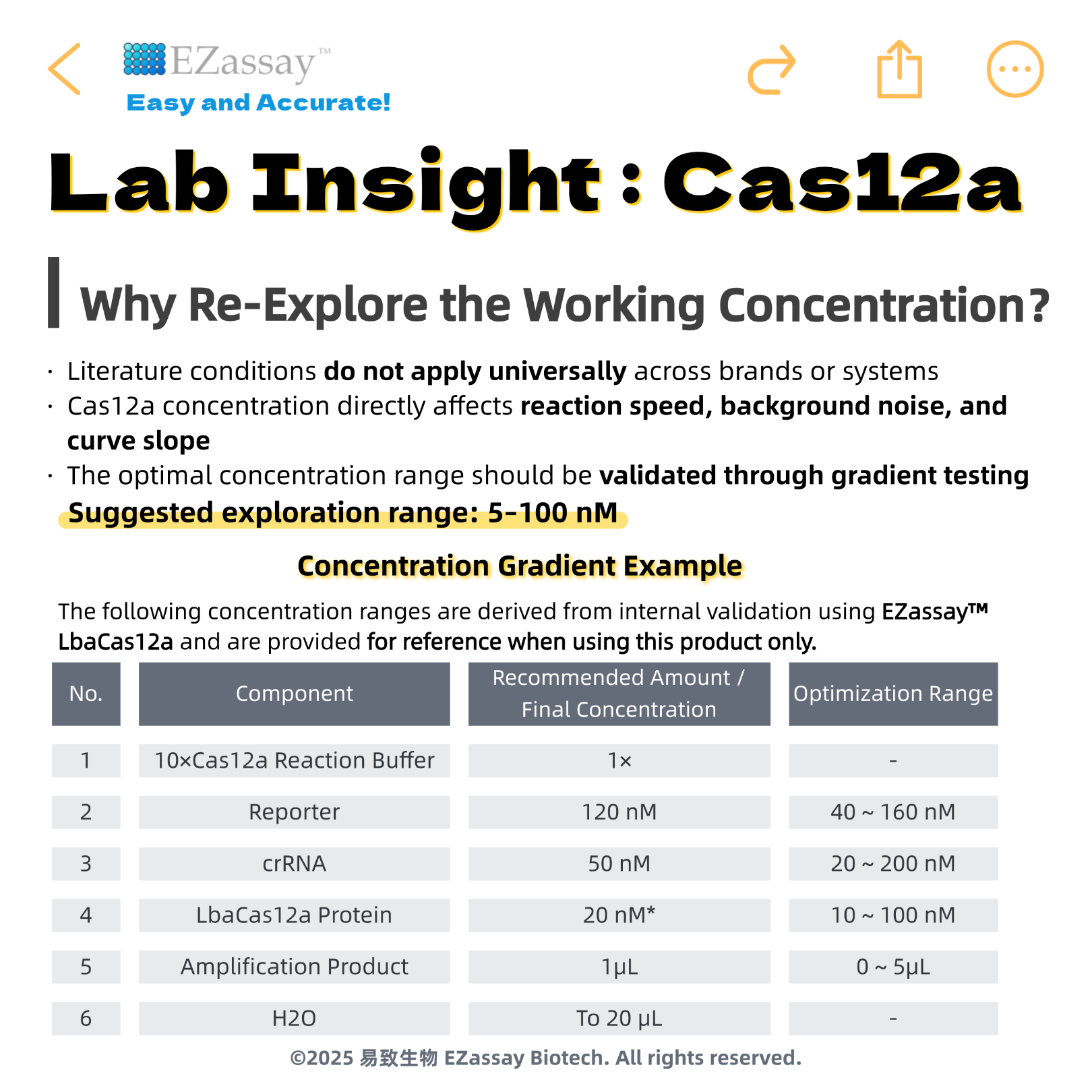
Suggested exploration range: 5–100 nM
Concentration Gradient Example
Validated in an EZassay™ LbaCas12a–based system
The following concentration ranges are derived from internal validation using EZassay™ LbaCas12a and are provided for reference when using this product only.
Note:
Cas12a activity and reaction composition may vary between brands.
Further optimization is recommended based on your specific experimental system.
A Practical Example: Cas12a Working Concentrations Vary by Brand
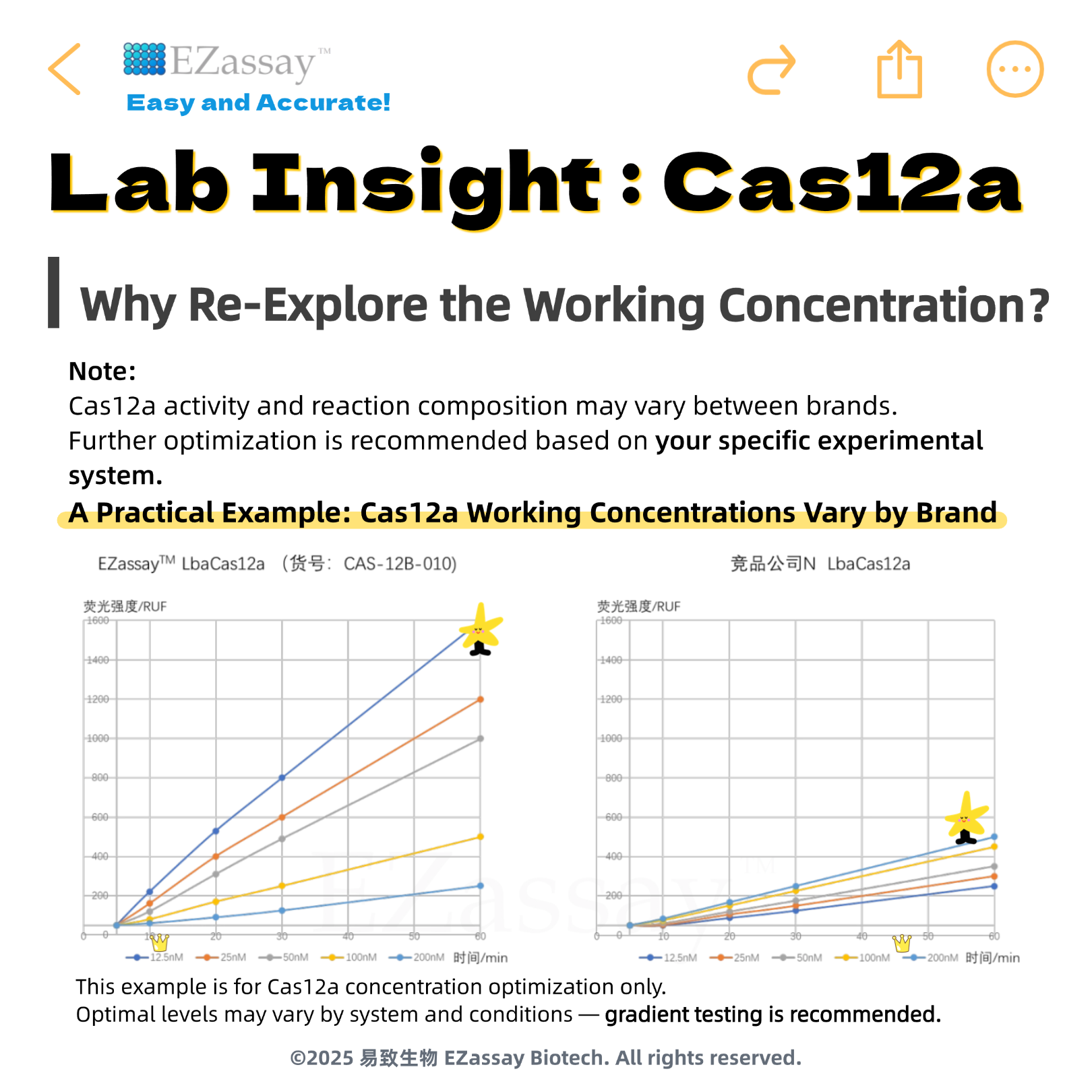
This example is for Cas12a concentration optimization only.
Optimal levels may vary by system and conditions — gradient testing is recommended.
Experimental Setup:
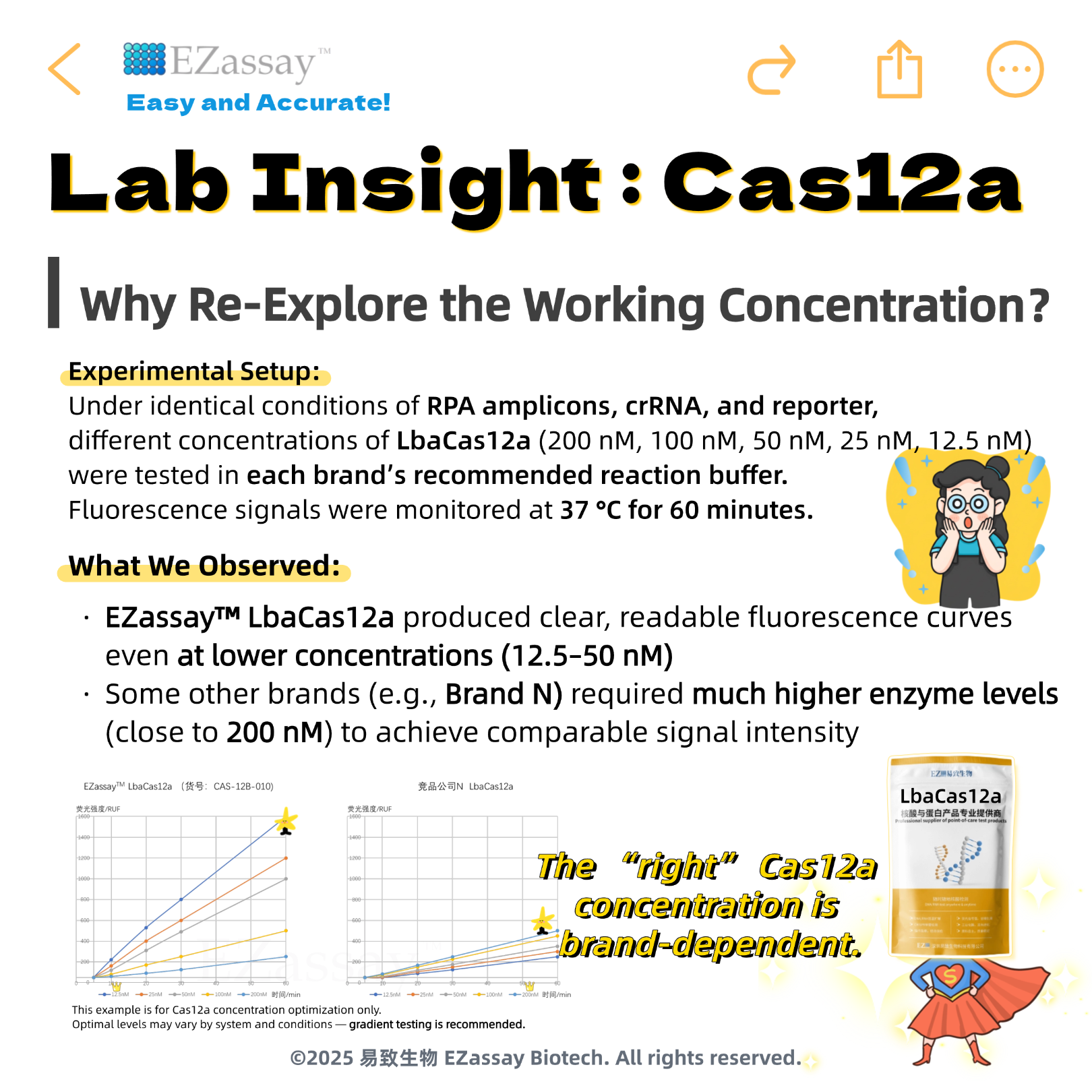
Under identical conditions of RPA amplicons, crRNA, and reporter, different concentrations of LbaCas12a (200 nM, 100 nM, 50 nM, 25 nM, 12.5 nM) were tested in each brand’s recommended reaction buffer.
Fluorescence signals were monitored at 37 C for 60 minutes.
What we observed:
- EZassay™ LbaCas12a produced clear, readable fluorescence curves even at lower concentrations (12.5–50 nM).
- Some other brands (e.g., Brand N) required much higher enzyme levels (close to 200 nM) to achieve comparable signal intensity.
The “right” Cas12a concentration is brand-dependent.
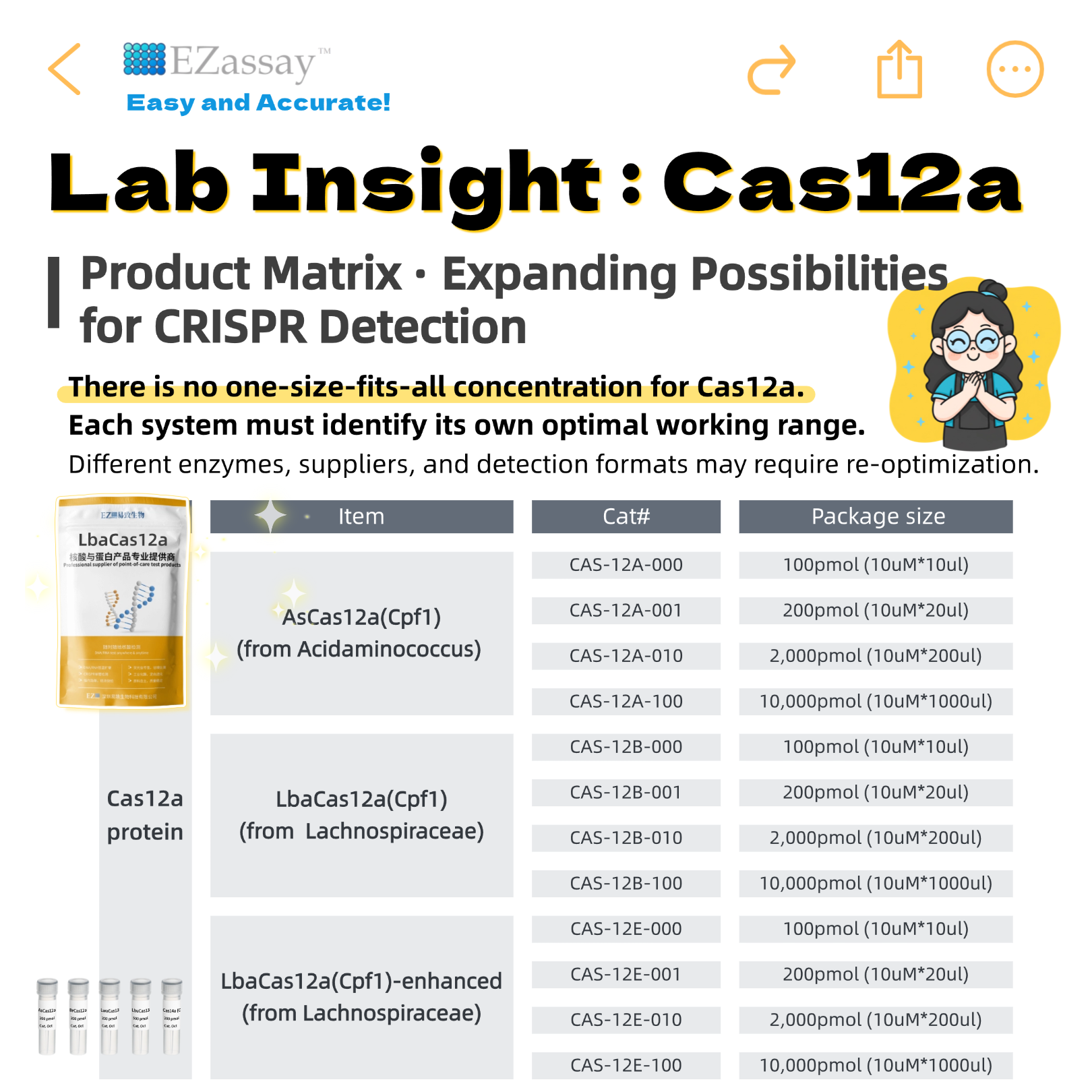
Product Matrix · Expanding Possibilities for CRISPR Detection
There is no one-size-fits-all concentration for Cas12a.
Each system must identify its own optimal working range.
Different enzymes, suppliers, and detection formats may require re-optimization.
Cas12a signal matters.
Optimize concentration. Improve consistency.
For product information and technical support, please contact EZassay Biotech™.
#CRISPR #cas12a #FluorescenceDetection #LabOptimization #2026Ready #ezassaybiotech