2026-3-16
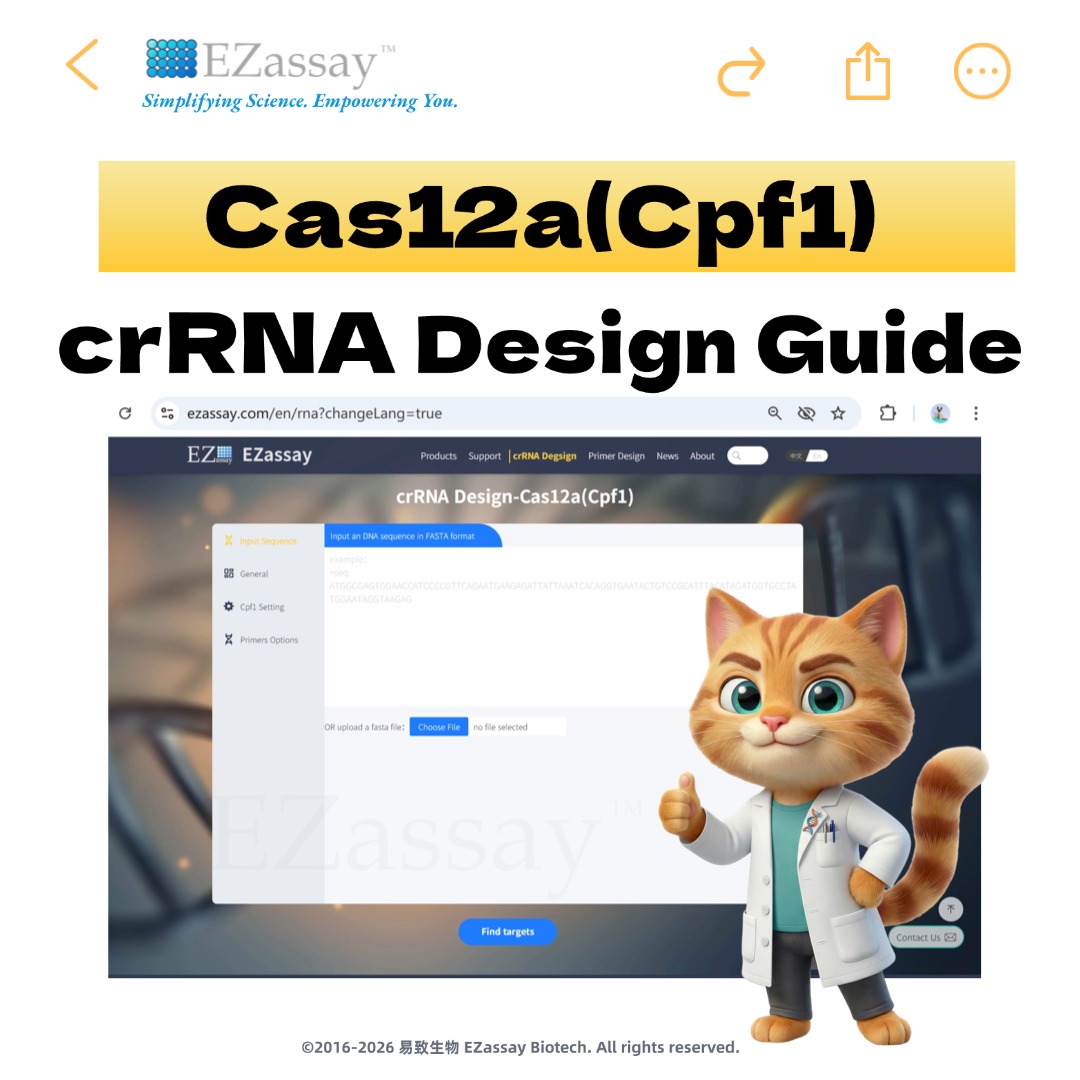
Cas12a (Cpf1) crRNA Design Guide
Step-by-Step Tutorial for Efficient CRISPR Detection & Molecular Diagnostics
How should Cas12a (Cpf1) crRNA be designed?
Parameters such as PAM sequence, crRNA length, and efficiency score can significantly influence the sensitivity and specificity of CRISPR-based detection assays.
This tutorial is based on the EZassay online crRNA primer design tool and summarizes a practical workflow for designing Cas12a crRNA:
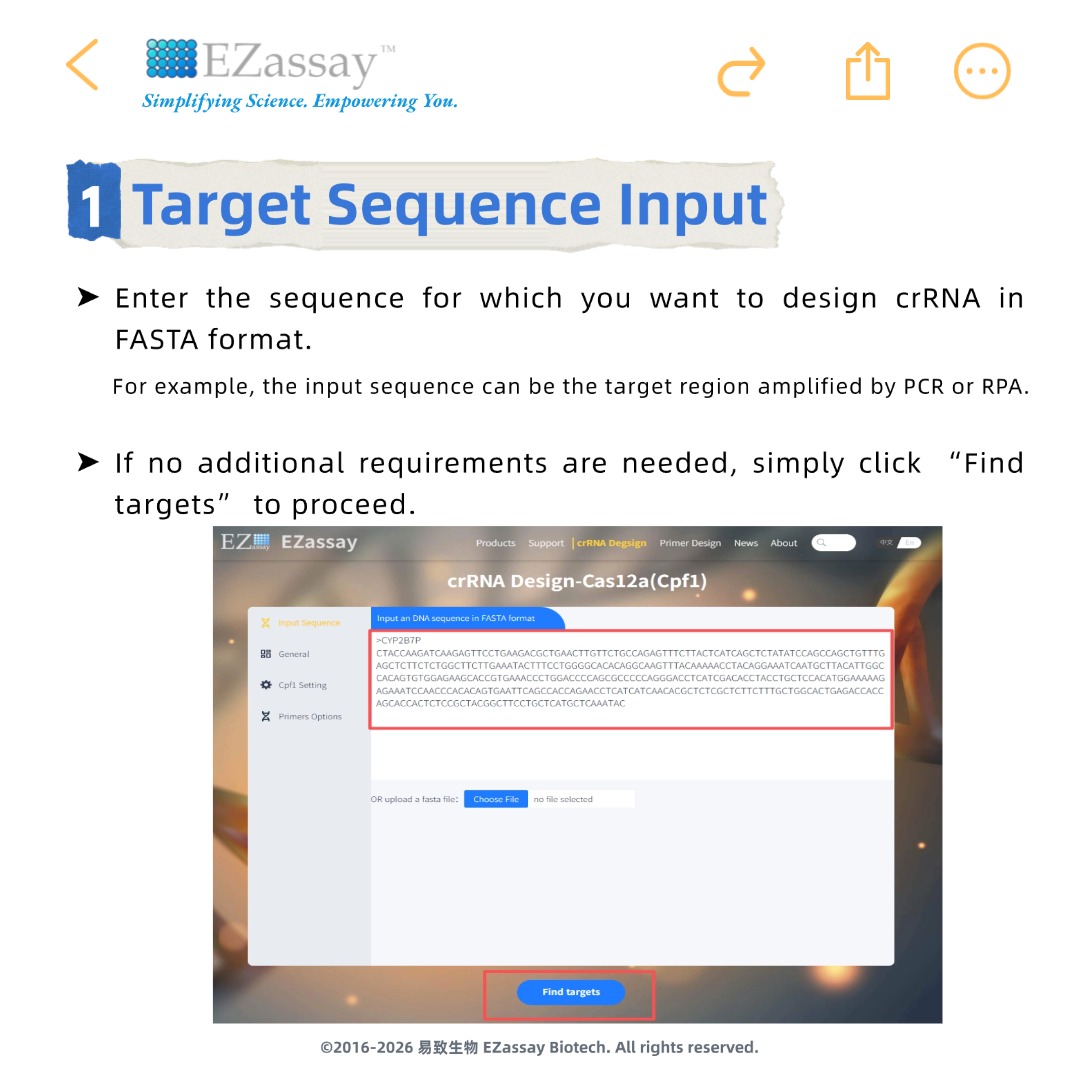
✔ Target sequence input
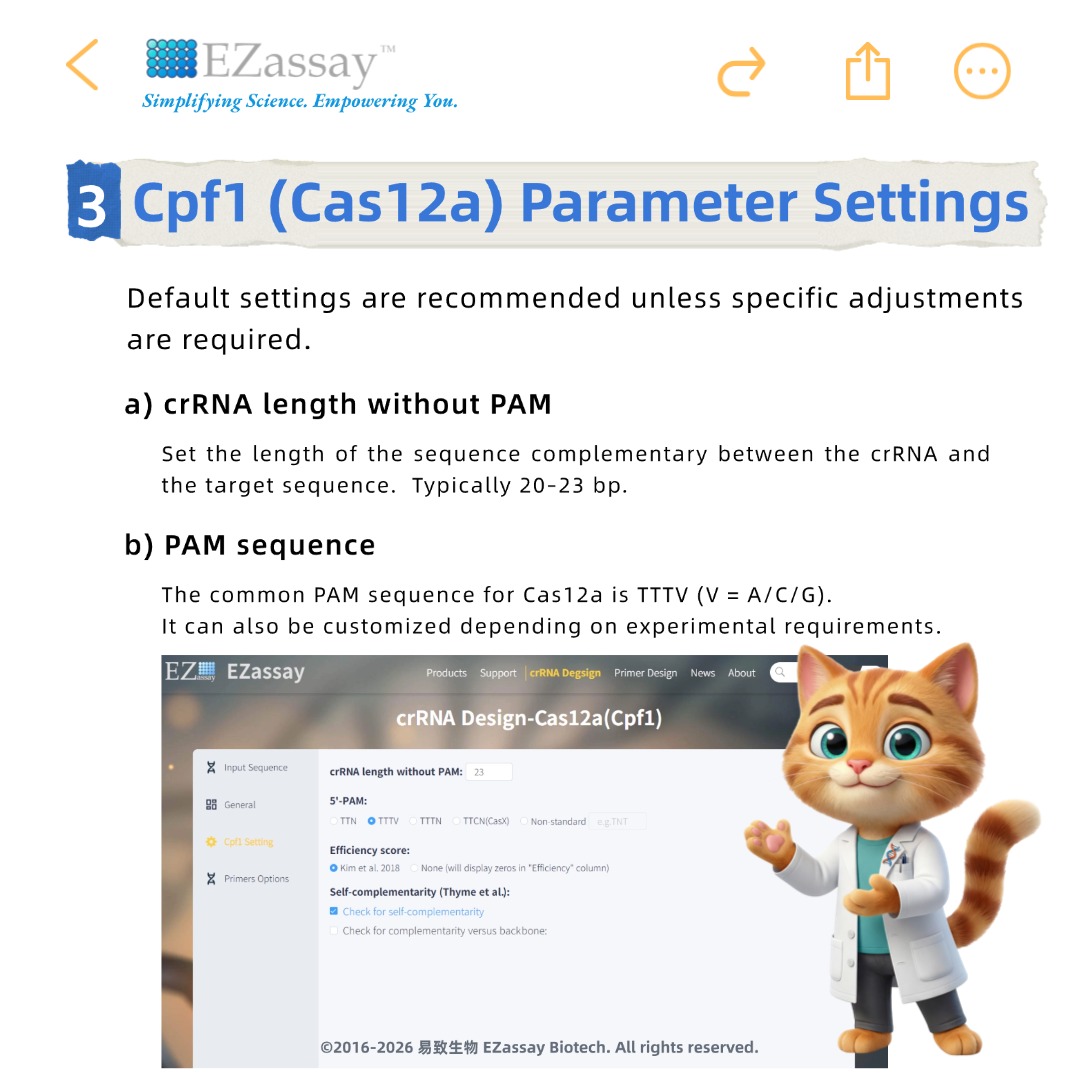
✔ Cas12a parameter configuration (crRNA length, PAM sequence, efficiency score, and self-complementarity evaluation)
✔ Optional PCR primer design
✔ crRNA candidate selection and scaffold sequence assembly
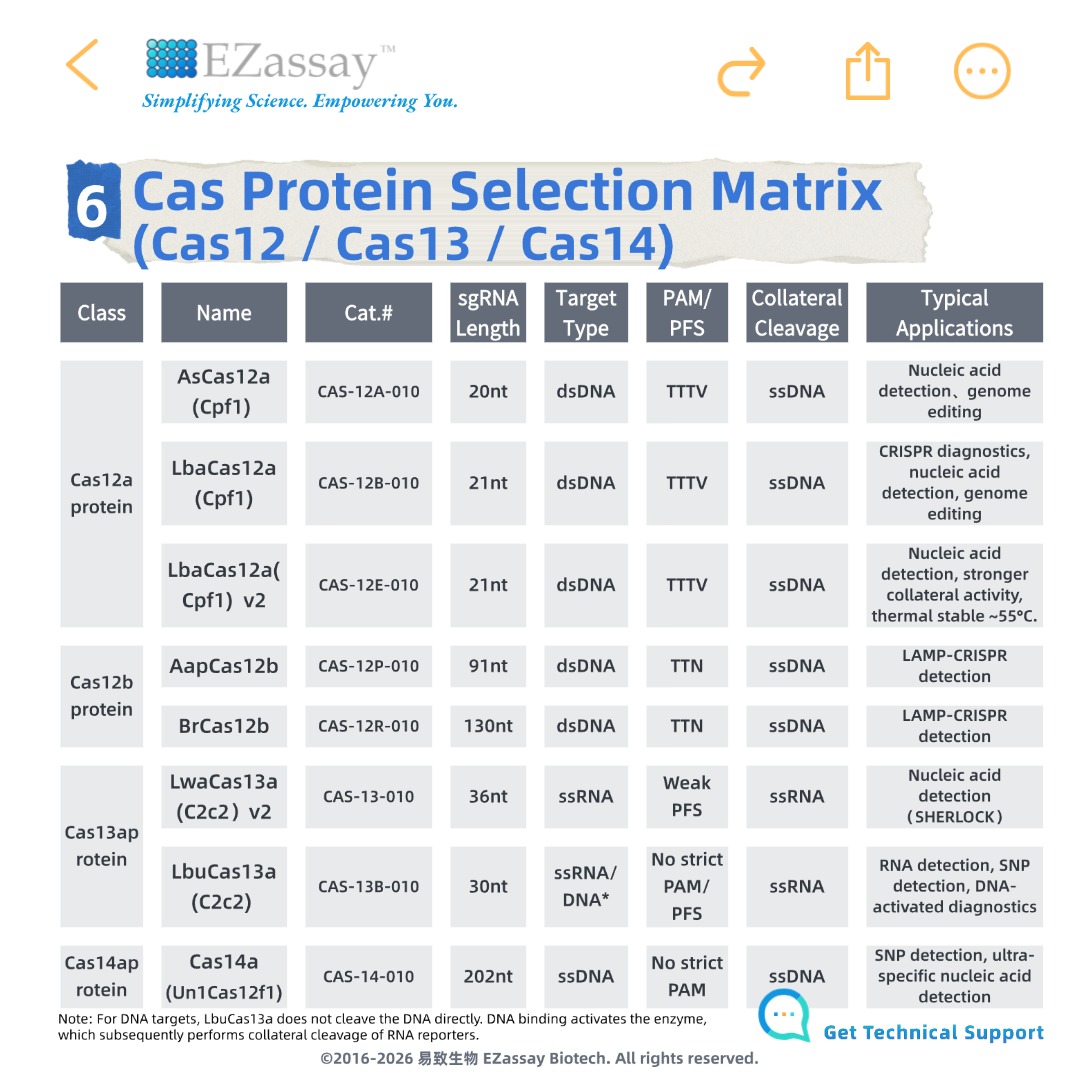
In addition, a Cas protein selection matrix (Cas12 / Cas13 / Cas14) is provided to help researchers quickly identify the most suitable CRISPR enzyme based on:
• Guide RNA length (sgRNA / crRNA)
• Target type (DNA or RNA)
• PAM / PFS requirements
• Trans-cleavage activity
This reference guide helps streamline the process of selecting the optimal CRISPR detection tool for specific experimental applications.
If you are working on CRISPR detection assays, molecular diagnostics, or Cas12a-based experimental design, this tutorial can serve as a practical reference for designing efficient crRNA.
Tip: Save this guide for quick reference when designing crRNA for future CRISPR experiments.
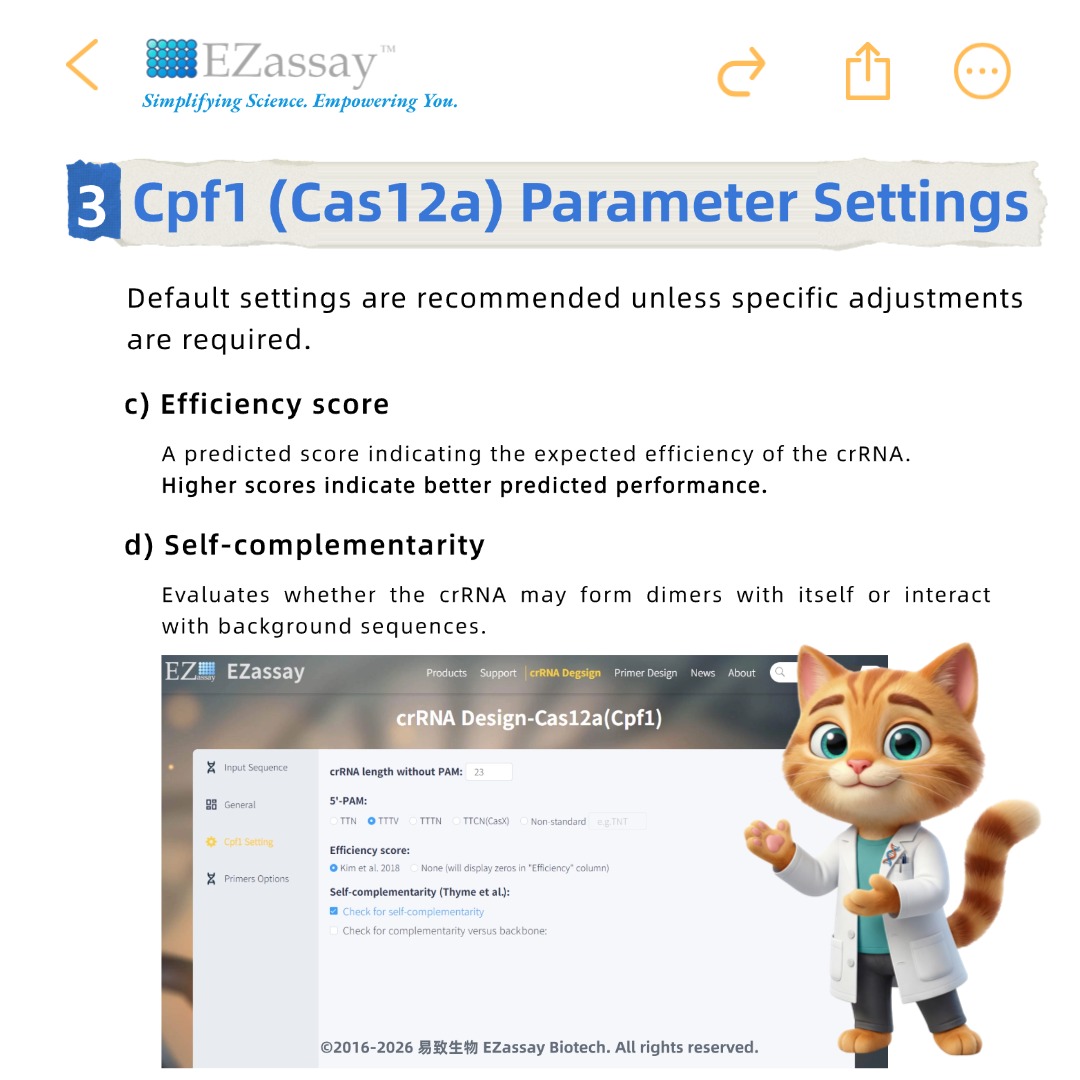
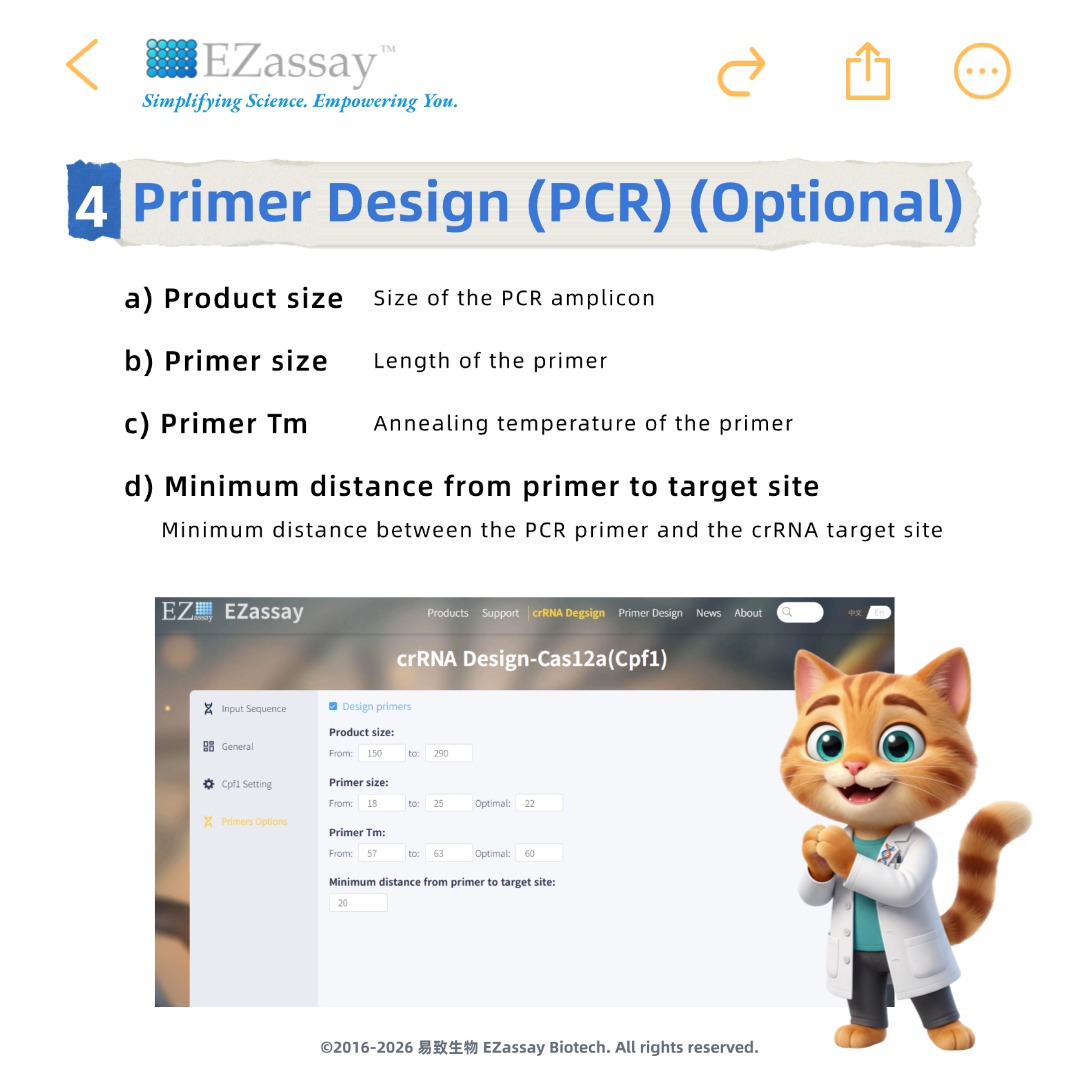
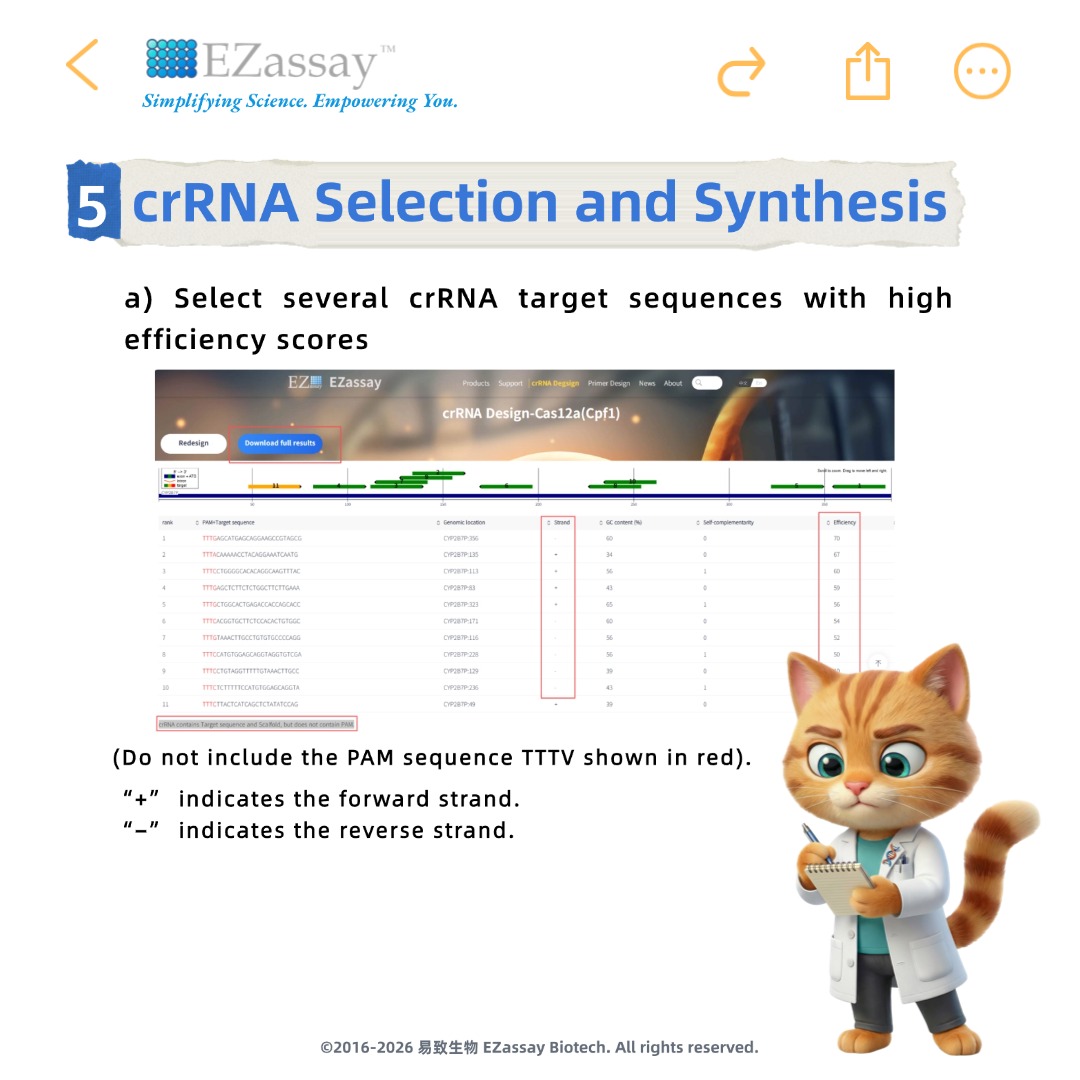
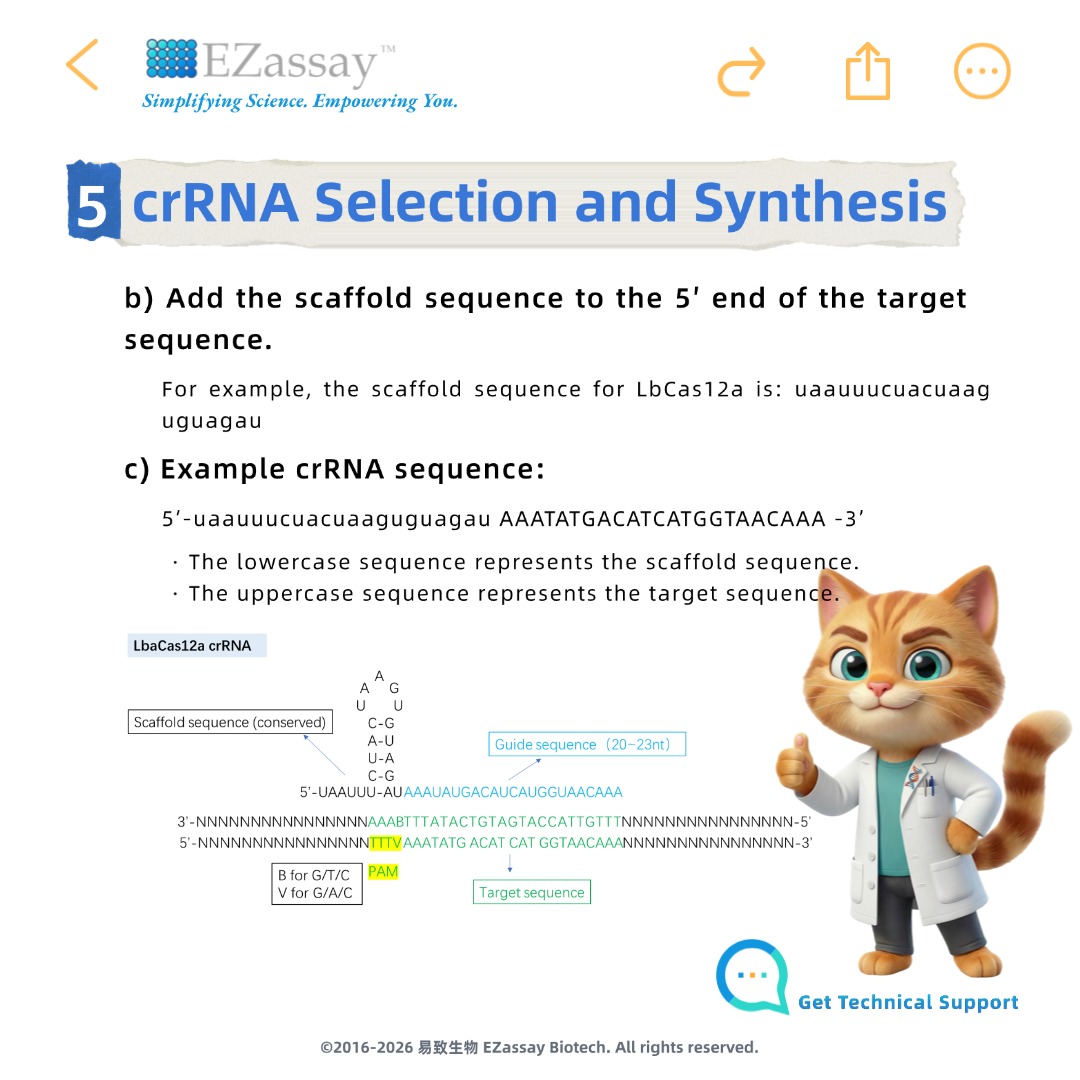
CRISPR Enzyme Solutions for Nucleic Acid Detection
In CRISPR-based molecular detection systems, crRNA design is a critical factor affecting assay sensitivity and specificity. From Cas12a target site selection and PAM recognition to efficiency scoring and secondary structure evaluation, a well-designed crRNA can significantly improve the overall performance of CRISPR detection workflows.
In practice, crRNA design is often optimized together with the selection of the appropriate Cas enzyme and detection strategy.
For example:
- Cas12 family proteins are widely used for DNA target detection and CRISPR assays combined with isothermal amplification methods such as RPA or LAMP.
- Cas13 proteins are ideal for RNA detection, including applications such as RNA virus diagnostics.
- Cas14 (Cas12f) proteins offer advantages for ultra-specific nucleic acid detection and SNP analysis due to their unique target recognition properties.
EZassay Biotech™ provides a comprehensive portfolio of CRISPR enzyme reagents, including Cas12, Cas13, and Cas14 family proteins, together with supporting tools such as:
- Guide RNA transcription kits
- CRISPR cleavage reaction kits
- Fluorescent and lateral-flow reporter probes
These solutions support the complete CRISPR detection workflow, from crRNA design and RNA synthesis to assay development and nucleic acid detection.
Whether you are developing a new CRISPR diagnostic assay, improving detection sensitivity, or optimizing an existing workflow, EZassay offers high-purity enzymes, reliable performance, and professional technical support to accelerate your research.
For CRISPR enzyme product information, crRNA design assistance, or experimental workflow consultation, please contact the EZassay Biotech™ technical team to find the right CRISPR solution for your research.
Footnote: CRISPR is a trademark of the Broad Institute.
Keywords
Cas12a crRNA Design | CRISPR Enzymes | Cas12 Protein | Cas13 Protein | Cas14 Protein
CRISPR Detection | Nucleic Acid Detection | Isothermal Amplification
Guide RNA Synthesis | RNA Virus Detection | SNP Detection
Fluorescent Detection | Lateral Flow Assay